Tag Archives: deep sea

The 4th Bathysphere Symposium

October 15-16th 2026, Sommarøy, Tromsø

The Tromsø edition of the bathysphere logo. A circular design in hues of blue, with a black outline of the bridge and catherdral of tromsø imposed on it.

Since the beginning in 2023, Bathysphere has arranged annual symposia for those working with the deep sea.

The first three* meetings were arranged by the Bergen node (at the time, the only one), but this year the torch was picked up by the newly formed Tromsø node of Bathysphere.

“Bathysphere is a voluntary deep-sea network of Norway-based deep-sea scientists and professionals who want to increase collaboration and knowledge-sharing across local institutes. The network is named after the Bathysphere, a unique spherical submersible designed for deep-sea exploration. “

(from bathysphere.no, go check it out!)

54 participants gathered for two days filled with presentations, posters, discussions and socializing in a gorgeous venue (though the weather was…interesting at times, with winds reaching over 23 m/s and rain coming horizontally).
The talks covered a wide range of topics, split into sections on:

  • Creating knowledge baselines and Monitoring change in the Deep-Sea
  • Emerging Technologies & Methodologies
  • A discussion on how we inform management and policy makers
  • Deep-sea Management
  • Deep sea across areas/regions/realms, and finally
  • Making the Deep-Sea Visible: Art, Outreach and Visual Communication

Three of us from the museum gave talks.
🪼 Luis presented on behalf of the Manet Team their work on a jellyfish species that is turning out to be several species; “A bloom of species revealed by multimarker DNA data: the hyperbenthic deep-water jellyfish Ptychogastria polaris across Arctic, Antarctic, and Atlantic waters”,

🧬 Nataliya spoke about how we are using molecular data to understand deep-sea macrobenthic diversity, and how museum collections play a vital role in this work.

🦐 Katrine presented some preliminary findings from the MADAM project about how we are trying to record which other animals our amphipods are choosing as microhabitat, and how that might help us unravel cryptic diversity in the six families we work on. I also urged the many cruise participants and ROV-footage experts in the room to keep an eye out for such interactions.

images from a lecture hall; three presenters from the museum (see text for details) and the poster session
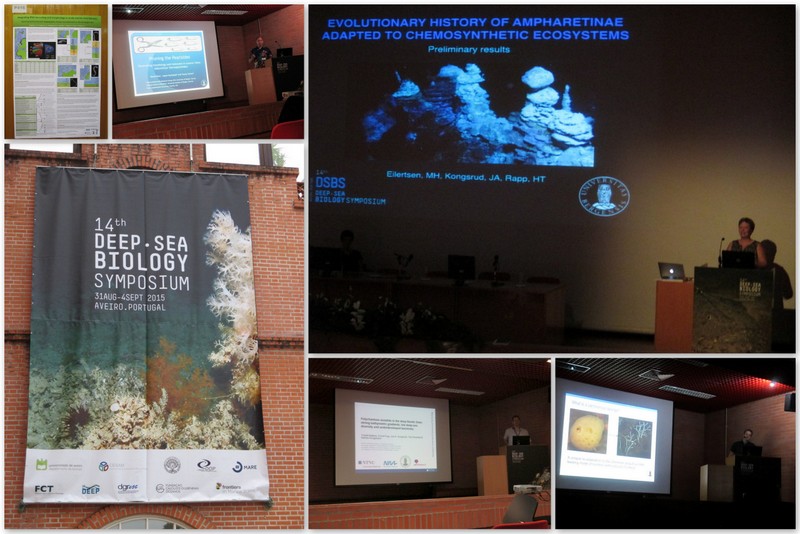
Presentations by Luis, Nataliya and Katrine, and from the poster session.

The outreach-session was particularly engaging, first with talk by former master student Lara, who is co-founder of a very cool initiative called the Unseen Ocean Collective (web page here), followed by a presentation by Jane Zimmermann, who will be illustrating the children’s book “Worm Party in the Deep” that our UiB colleague (and also former museum master student!) Mari is making.

After the talks it was time to get our hands dirty (literally!), and try to create clay creatures that could exist in the deep.

Hands-on work, with varying degree of success, but with lots of laughter

It was a wonderful meeting, and we are so grateful to the organizers for all the work they did to make it happen. Huge thank you also goes to all the participants, for making this such a friendly and welcoming venue to meet. Next Bathysphere will be in Bergen in 2027, hope to see you there!

Bathysphere Symposium 2026. Photo: Camille Saint-André

*You can read about our participation at Espegrend in 2025 here: Museum attendance at the Bergen Bathysphere Science Symposium 2025 | The Invertebrate Collections

PS: For anyone interested in the deep sea, the pre-registration for the big deep sea biology conference that will be held in Bergen in April 2028 is live!

Link is here

Project home pages:
Norske Arktiske Hydrozoer (NOAH)
Marine Amfipodar: Diversitet, Artskompleks og Molekylær studiar (MADAM)
Leddormer i Arktis (MAnDAriN)
The evolutionary origins and consequences of bipolarity in Hydrozoa (POLE2POLE) (Marie Skłodowska-Curie Actions)

The 14th Deep-Sea Biology Symposium

  • IMG_9001


  • 5 days
  •  ~200 talks
  • ~240 posters
  • 35 nationalities
  • 360 enthusiastic participants
  • Immeasurable cups of coffee & lots of pastries


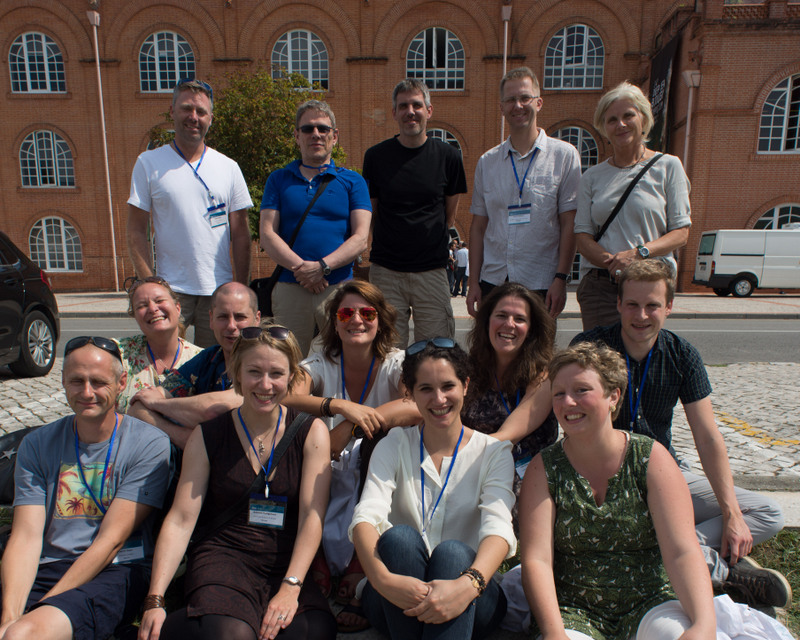
The 14th Deep-Sea Biology Symposium was arranged in Aveiro, Portugal between 31st of August and 4th of September, and these happy people were amongst the participants.

The Norwegian University/museum entourage came from the Biological Institute (9),                  the University Museum (4), and the NTNU University Museum (1).

AveiroDSBS2015_PT-5749

The topics of the conference was divided into seven main themes:

  1. Biodiversity and ecosystem functioning
  2. Advances in taxonomy and phylogeny
  3. Autoecology
  4. Connectivity and biogeography
  5. Evolutionary history and fossil records
  6. Natural and anthropogenic disturbance
  7. Stewardship of our deep oceans (DOSI)

(more details about the themes can be found here)

Our contributions ranged from sponges to fish, and included both talks and posters.

In no particular order (UM people in bold):

Bilder Aveiro
Talks:

Eilertsen MH, Kongsrud JA, Rapp HT – Evolutionary history of Ampharetinae (Ampharetidae, Annelida) adapted to chemosynthetic ecosystems

Hestetun JT, Vacelet J, Boury-Esnault N et al – Phylogenetic relationships of carnivorous sponges

Rees DJ, Byrkjedal I, Sutton TT – Pruning the pearlsides: reconciling morphology and molecules in mesopelagic fishes (Maurolicus: Sternoptychidae)

Bakken T, Oug E, Kongsrud JA, Alvestad T, Kongshavn, K – Polychaetous annelids in the deep Nordic Seas: strong bathymetric gradients, low deep-sea diversity and underdeveloped taxonomy

Xavier JR, Marco J, Rapp HT, Davies AJ – Predicting suitable habitat for the bird’s nest sponge Pheronema carpenteri (Porifera, Hexactinellida) in the Northeast Atlantic

DSC_1063

Posters:

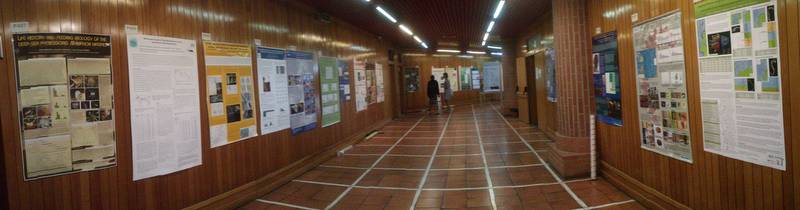
Kongshavn K, Kongsrud JA, Tandberg AHS, Alvestad, T, Bakken, T, Oug, E, Willassen E – Intergrating DNA-barcoding and morphology to study marine invertebrates – Exploring biodiversity and biogeography of deep-sea polychaetes in the Norwegian Sea

Hestetun JT, Xavier JR, Rapp HT – Carnivorous sponges from the Southwestern Indian Ocean Ridge seamounts

Alvizu A, Tendal OS, Rapp HT – Deep-water calcareous sponges (Calcarea: Porifera) from the Norwegian, Greenland and Iceland Seas (GIN) – from abyssal plains to mid-ocean ridges and hydrothermal vents

(Xavier JR), Pereira R, Gomes Pereira JN, Tempera F et al – Sponge assemblages of the Condor seamount (Azores) characterized from underwater imagery

Olsen BR, Troedsson C, Hadziavdic K et al – The influence of hydrothermal fluids on pelagic eukaryotic microorganism diversity and subsequent prey selection in a pelagic amphipod in the Nordic Seas

Bilder Aveiro1

In addition to these direct contributions, it was very gratifying to see our friends and colleagues presents results that were in part based on University Museum assistance, whether through participation on cruises with us, loans of material, visits to the Museum collections or data made available. Quite a few of our photos also found their way into presentations, which is always fun!

[slideshow_deploy id=’1240′]


It was a busy week with a lot of information to absorb and a lot of old and new acquaintances and friends to talk to. We used this opportunity to spread the word about our current projects, and especially to discuss the challenges and potential of barcoding marine invertebrates.

We are very grateful to the organizing committee for taking on the herculean task of setting up such a wonderful symposium!

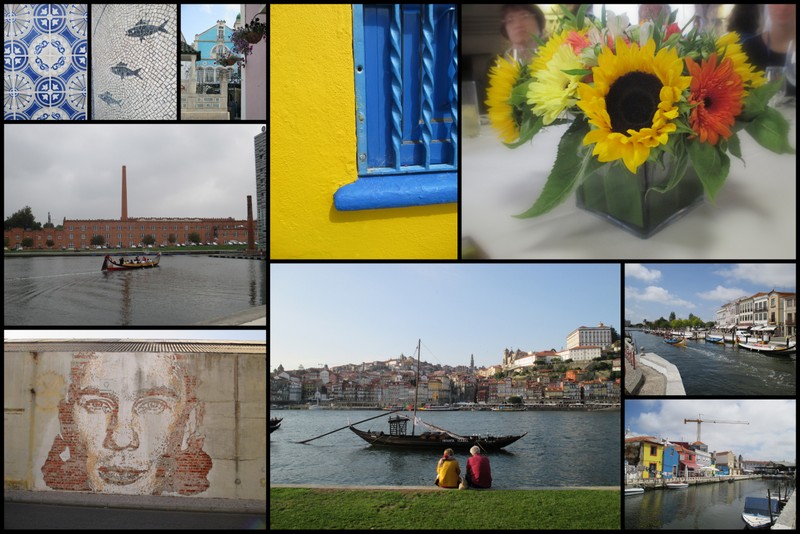
Obrigada/o!

Photo by @tangerina_ (Twitter)

Photo by @tangerina_ (Twitter)