Tag Archives: marine invertebrates

Berthella sideralis, a rarity finally documented alive and barcoded!

The Pleurobranchidae sea slug species Berthella sideralis was described by the Swedish malacologist Sven Ludvig Lovén in 1846 based on specimens collect at Bohuslän, in southern Sweden not far from the city of Gothenburg. This species has hardly been mentioned in the literature after its original description, and no images of life species are to our best knowledge available in books, research papers or even web platforms – until now!

A synthesis of the morphological features of B. sideralis can be found in Cervera et al. (2010) who studied in detail two specimens collected during 1930’s in Trondheimfjord as part of a phylogenetic study of the genus Berthella.

Recently, in late November 2015 during a Museum scientific cruise – there is a blog post about this day of field work here – we collected one specimen in Hjeltefjorden (around Bergen) at 220 meters depth using an RP-sledge. This specimen is here documented and was recently genetically barcoded as part of our effort to barcode the Norwegian marine fauna through the NorBOL project.
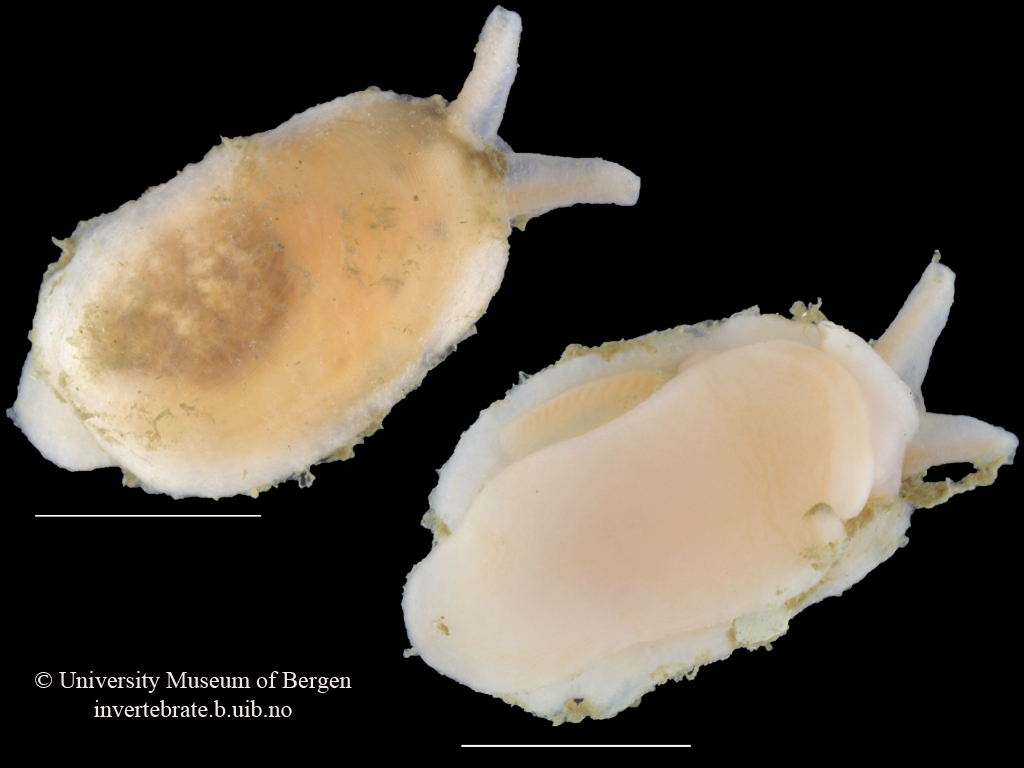
A live specimen of Berthella sideralis. Ths scale bar i 5 mm. Photo: K. Kongshavn

A live specimen of Berthella sideralis. The scale bar i 5 mm. Photo: K. Kongshavn

Berthella sideralis is only known from Sweden and Norway. In Norway it has been reported between Bergen and Finnmark.

Reference: Cervera, J L., Gosliner, T. M., García-Gómez, J. C., & Ortea, J. A. 2010. A new species of Berthella Blainville, 1824 (Opisthobranchia, Notaspidea) from the Canary Island (Eastern Atlantic Ocean), with a re-examination of the phylogenetic relationships of the Notaspidea. Journal of Molluscan Studies, 66: 301–311.

-Manuel & Katrine
Door #9: Delving into the DNA

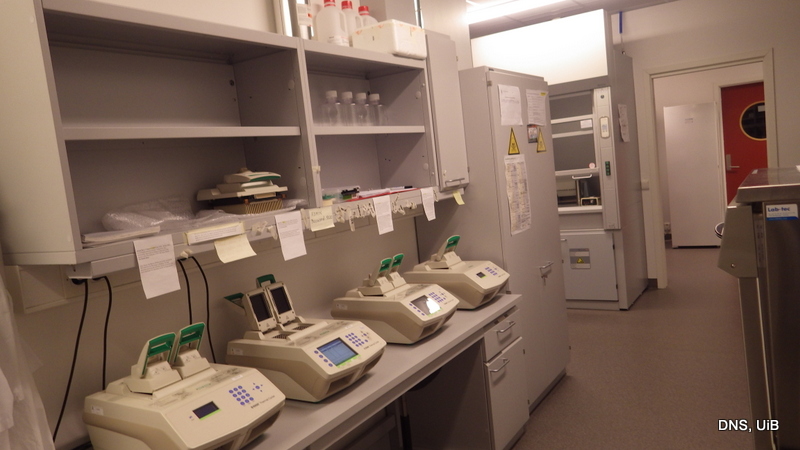
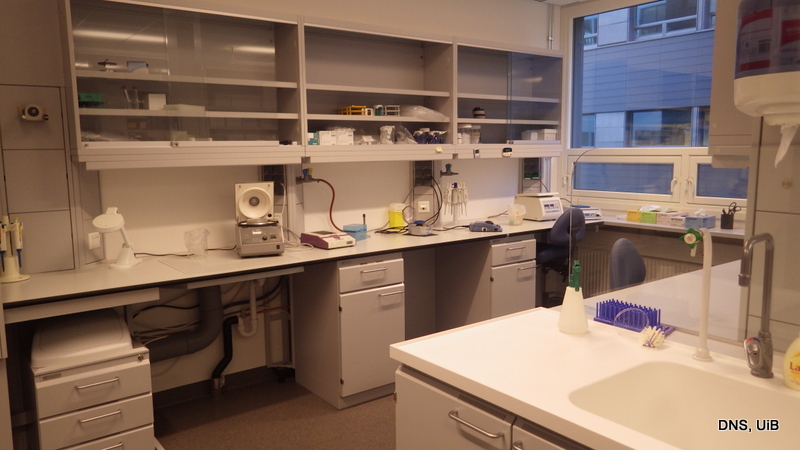
From the pre-PCR lab

From the pre-PCR lab

The four PCR-machines lined up

The four PCR-machines lined up

We are very fortunate in that we have a modern DNA lab available «just down the street» from us, as the University Museum is part of the shared Biodiversity laboratories (BDL) structure.

The BDL is a formalized cooperation between three research groups at Dept. of Biology (Marine biodiversity, Geomicrobiology and the EECRG), and two of the research groups at the University Museum. One of the senior engineers if this lab is a Museum employee, and from time to time we are also able to hire in other collaborators for specific projects.


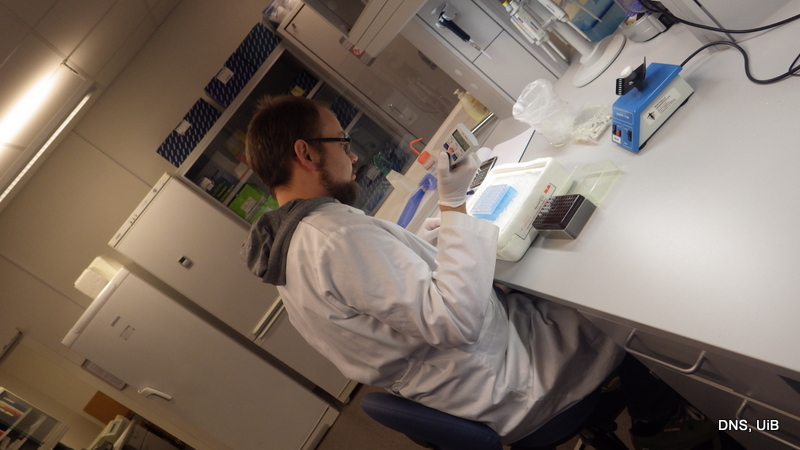
Pipetting

Pipetting samples onto one of the plates that we fill with DNA-extracts


For the past couple of months we’ve had a technician – Morten – working on resolving some of the challenges that we run into when we work on COI barcoding of marine invertebrates.

Unlike many of the other groups that this method works exceedingly well for (like the Diptera), we are experiencing difficulties in obtaining DNA barcodes from a significant proportion of our samples.

IMGP0775-001We are currently focussing particularly on the Polychaeta (bristle worms), as this is the group we have submitted the majority of samples from in both our major barcoding projects: MIWA (Marine Invertebrates of Western Africa) and NorBOL (Norwegian Barcode of Life).


Morten has been working on obtaining DNA from the more problematic species, by troubleshooting and tinkering on various aspects of the ways we extract and amplify genes.

Basically there are more or less standardized ways of obtaining DNA, and these methods normally works well. Unfortunately (for various reasons) this is not always the case, and this is where we have to alter the protocols to see if we can find a way to retrieve the sample DNA from the specimens.

So far it looks quite promising; we’ve been able to fill in some of the most important “blanks” in our datasets – and we’re not done yet!

– Morten & Katrine