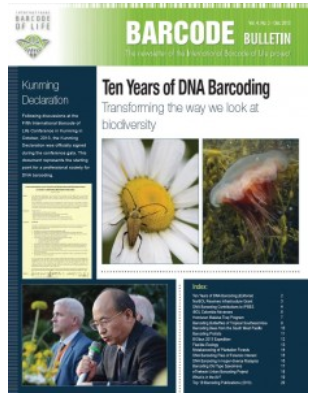
Barcode Bulletin is a newsletter from International Barcode of Life (IBOL). Barcode Bulletin Vol. 4, No. 2 – December 2013 has recently published two stories about activites we are involved in. One nice piece of news is that the Norwegian Biodiversity Information Center and the Research Council of Norway has decided to fund the NorBol consortium. The other news are about our summer 2013 workshop in the MIWA-project which was co-funded via IPBES.
More from the PolyNor workshop
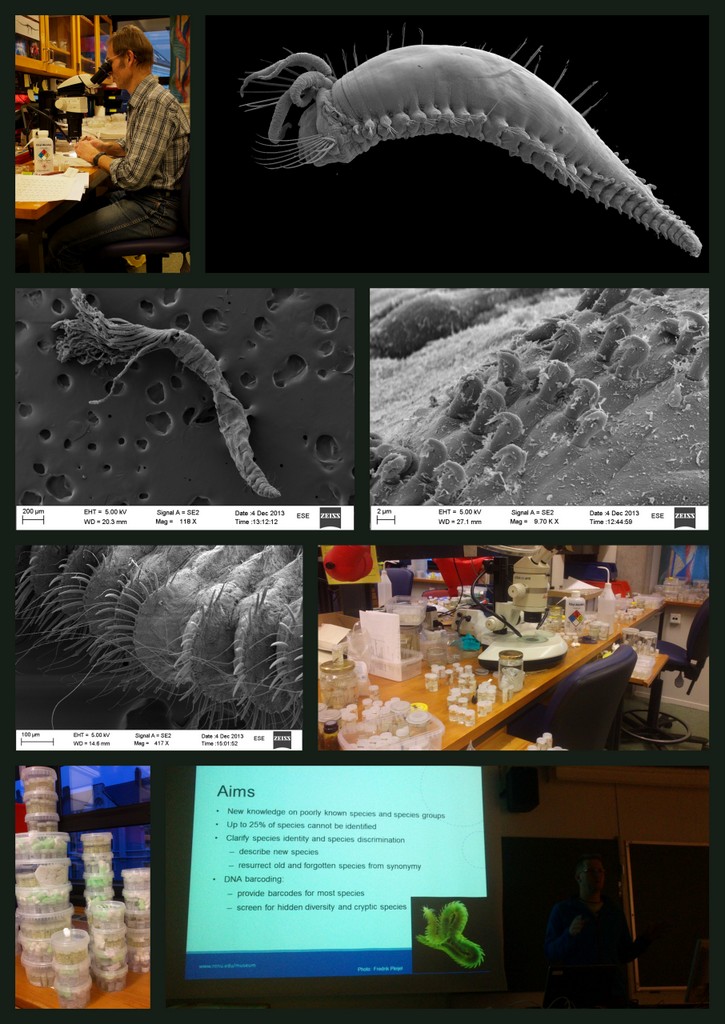
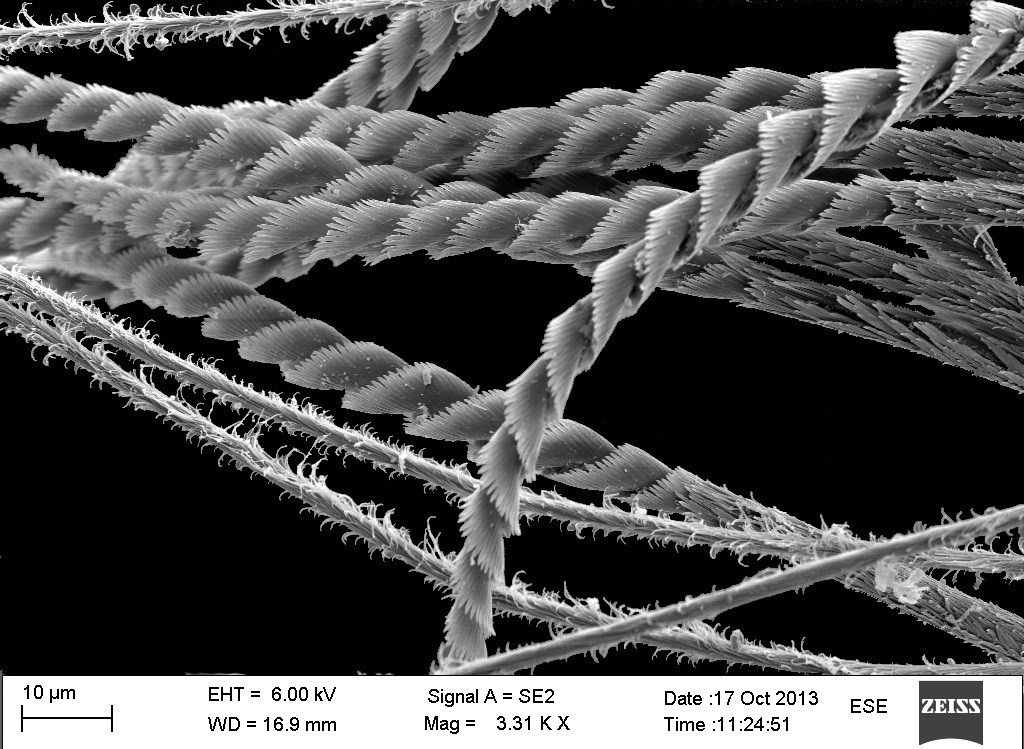
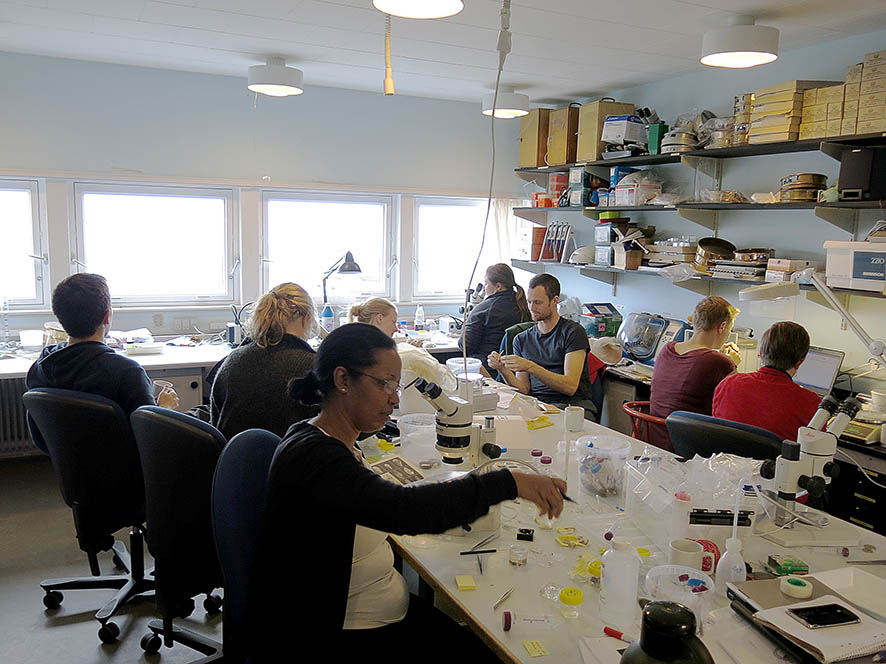
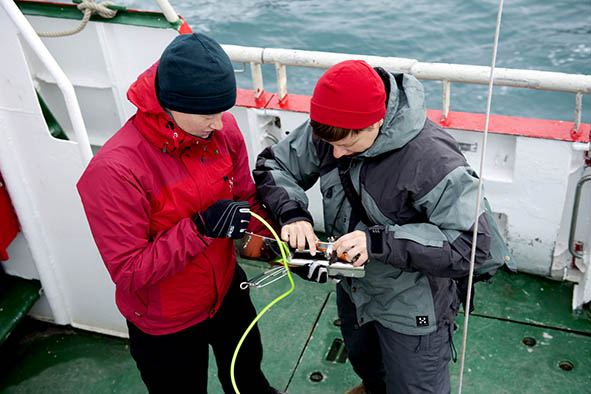
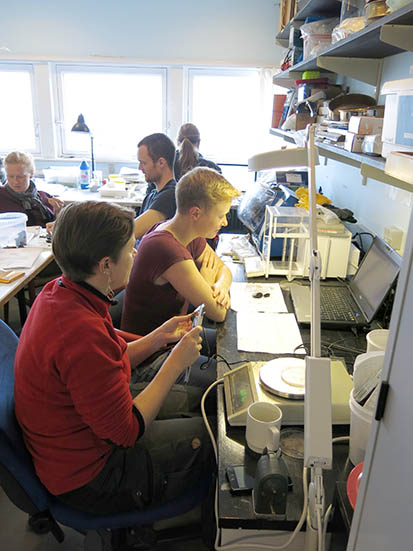
As usual, we use a variety of methods to work with our animals – these include use of stereo microscope, “ordinary” microscope, and electron scanning microscope (SEM). Below are some pictures of work in progress during today.
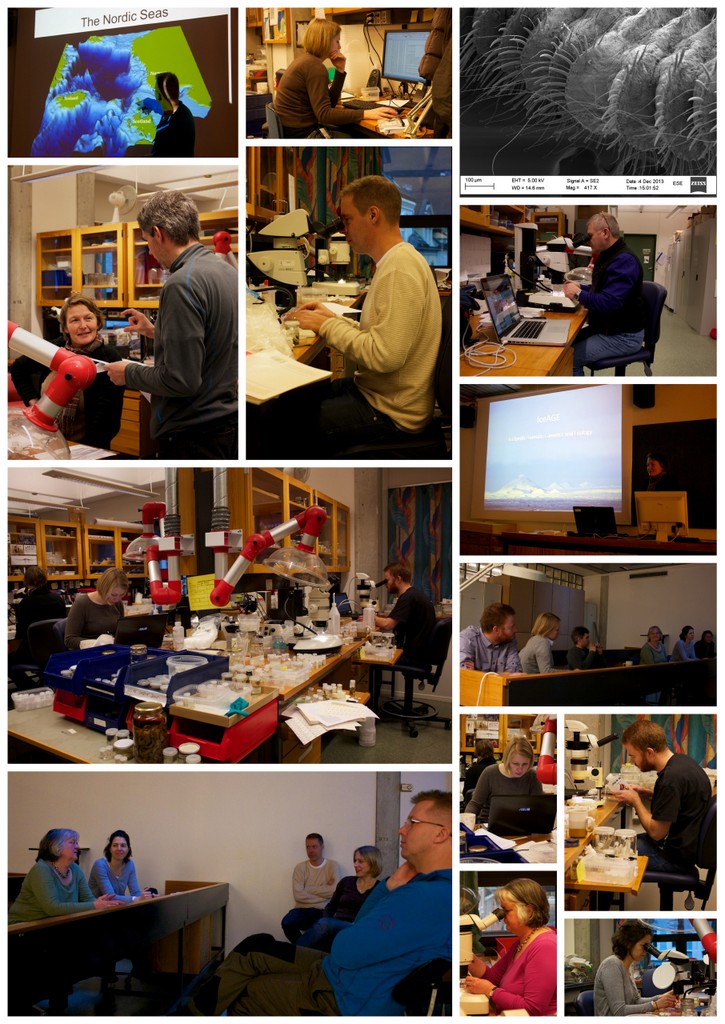
PolyNor Workshop on the MAREANO material
This week our lab is teeming with activity as twelve researchers goes to work on our polychaete material, focusing mainly on that which has been collected by the MAREANO program.
As mentioned previously, the material collected by MAREANO gets split into size based fractions, which then receive different treatments. As far as the polychaetes go, MAREANO carries out routine identification on what is collected by grab (1 mm) and beam trawl (5 mm), all of which has been fixed in formalin (until this year, where it was begun fixing half of the beam trawl in ethanol). Thus we already have some idea of what to expect to find in the material.
At the Invertebrate Collections we have processed a lot of bulk samples from the fractions that MAREANO does not utilize, and lately we have especially focused on the Ethanol fixed material, as this can be used for genetic work.
This workshop is part of the Polychaete diversity in the Norwegian sea (PolyNor) project. This project aim to explore the diversity of polychaetes in the Nordic seas;
The Norwegian Sea holds a diverse fauna of polychaete worms, more diverse than previously anticipated. Recent work has discovered several new species and species described in the old literature but not seen since their description, has been rediscovered. Material from new samples will be targeted to discover the true diversity of polychaetes in the Norwegian Sea.
During the workshop we will work on some of the groups with especially tricky taxonomy, prioritizing the identifying of specimens fixed in ethanol, and select individuals that are especially suited for genetic work. And of course we will also discuss current topics, find and reconnect with collaborators, drink an unholy amount of coffee, and learn some new things!
Friday Photo: the bristles of a bristle worm
Home, sweet home
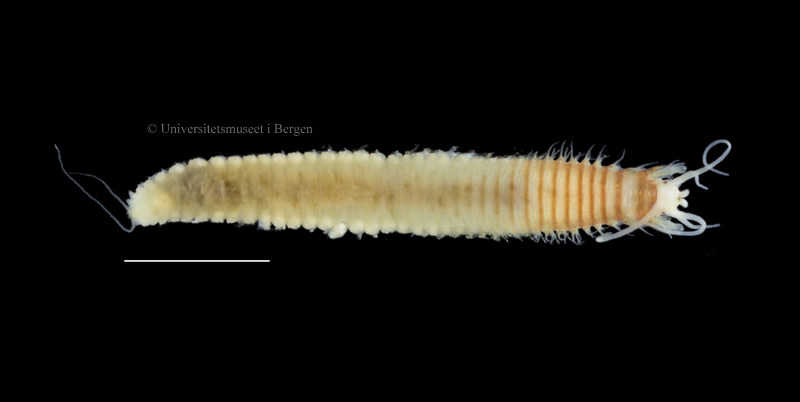
I came across these two bristle worms from the genus Nothria whilst sorting out the animals from a sample collected in the Barents sea by the MAREANO project, and wanted to show you how differently they’ve approached the choice of building materials for their tubes. They build the tube around their bodies to protect themselves from predators. Now, a Nothria outside its “house”, or tube, looks like this (scale bar is 2 mm) :
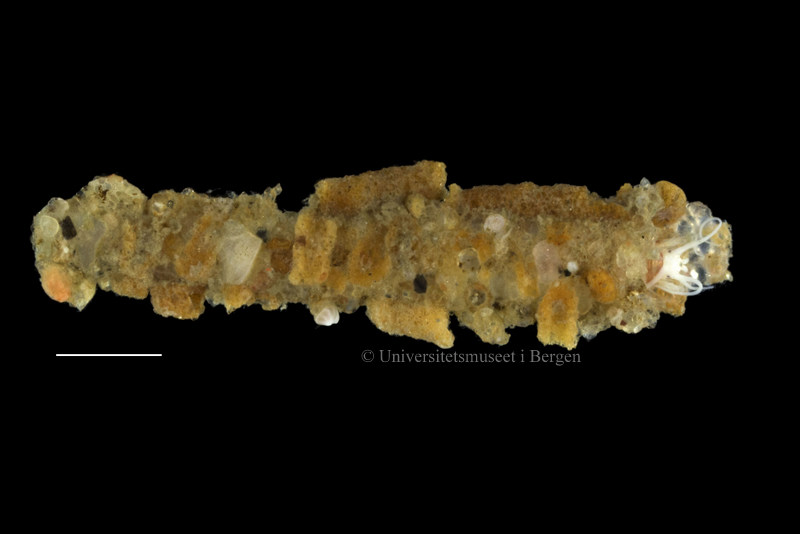
The same animal inside its tube looked like this:
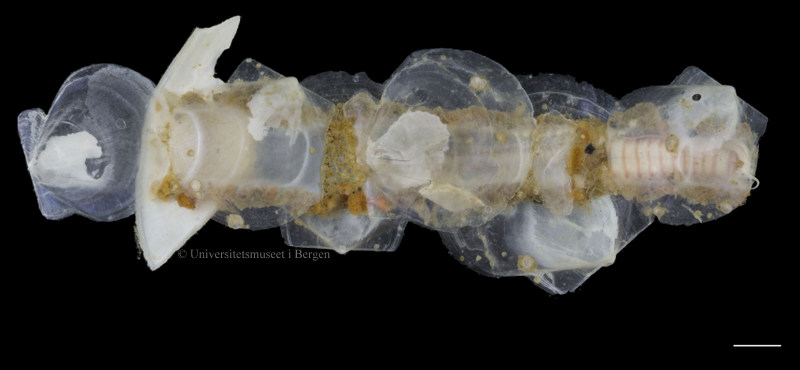
And then there was this one, who had made a more select choice of building materials:
Fall cruise with MAREANO
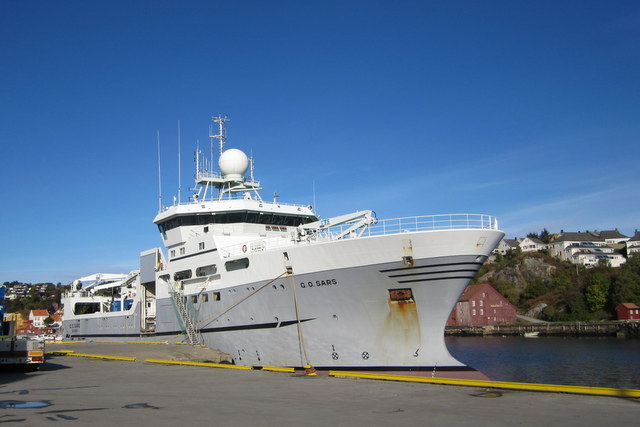
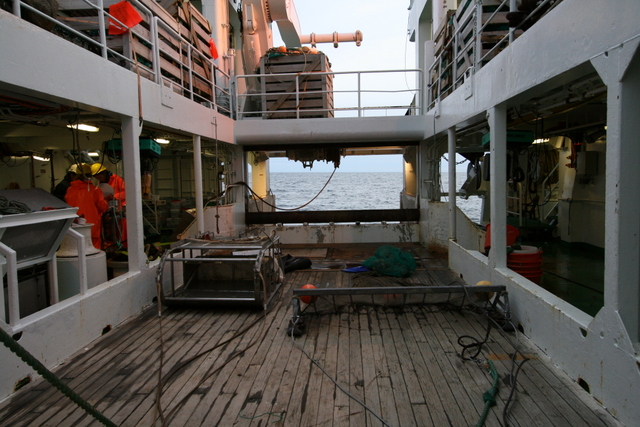
I’m onboard the research vessel “G.O. Sars”, participating in the last MAREANO cruise of the year. We’re currently on our way back out to the sampling sites after seeking refuge in a fjord from the storm yesterday.

Sampling areas. The yellow area is finished, the brown ones are work in progress. From mareano.no
The area we’re working on is outside Møre & Romsdal, currently we’re on our way to a set of video stations whilst we wait for the sea swell to die down (it’s quite the rollercoaster here at the moment!). We have two-three full stations remaining, hopefully we’ll be able to finish those as well before the cruise ends this Friday.
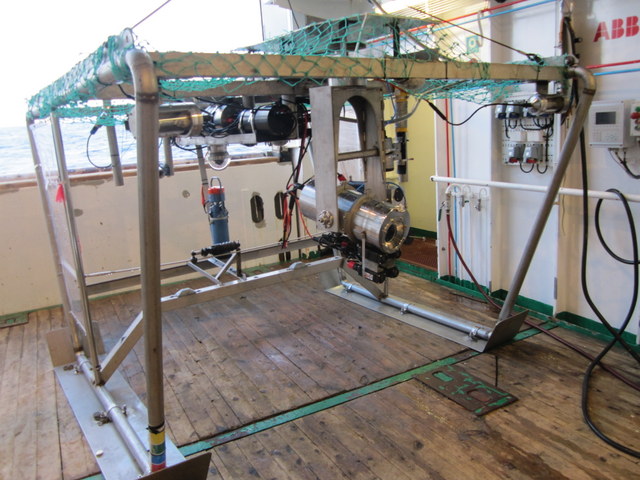
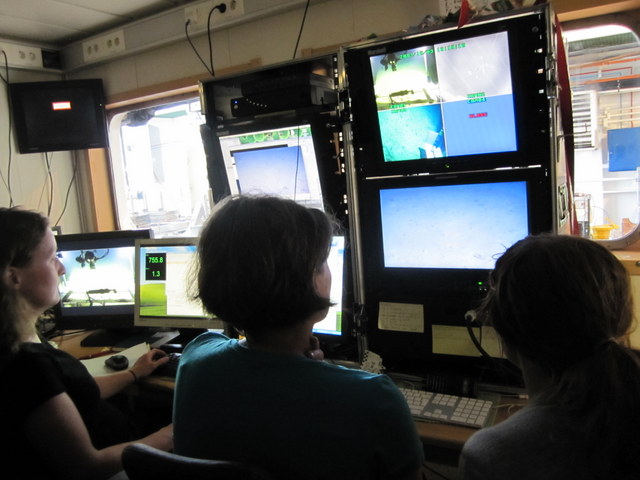
“Full station” means that we in addition to videoing the sea floor for a 700m long transect with our remotely controlled video rig, the Campod 2, also collect physical samples.
This is done using a variety of gears, which collectively gives us a extensive insight in the properties of the area we’re working on. On board we have a team of biologists, geologists and a chemist. The geologists and chemist are after sediment cores, which provide a window back in time for analyses of the physical and chemical parameters of the sea floor, including the accumulation of pollution. How far back a core extends will depend on the sedimentation rate, and on how long the core we manage to extract is.
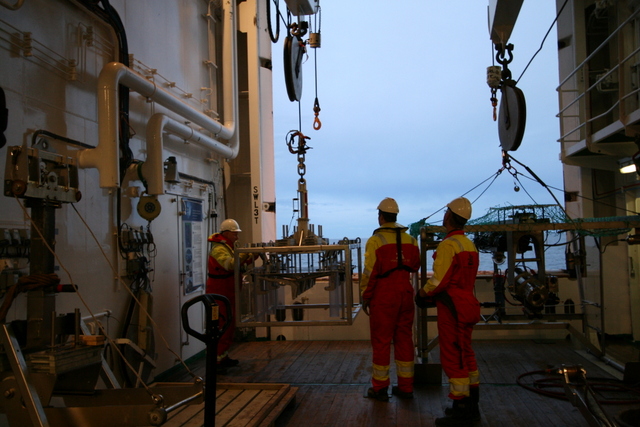
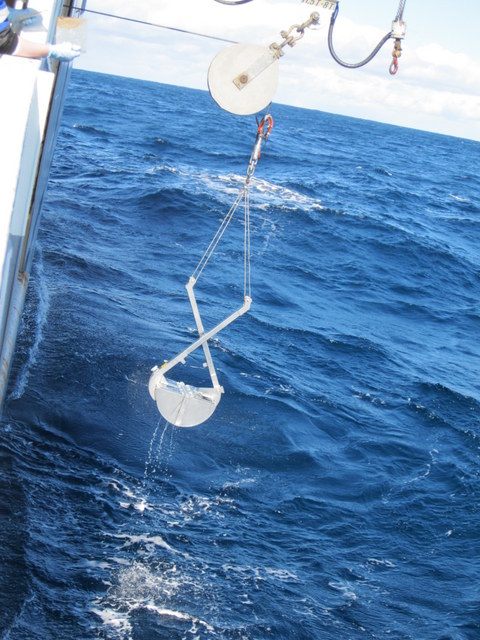
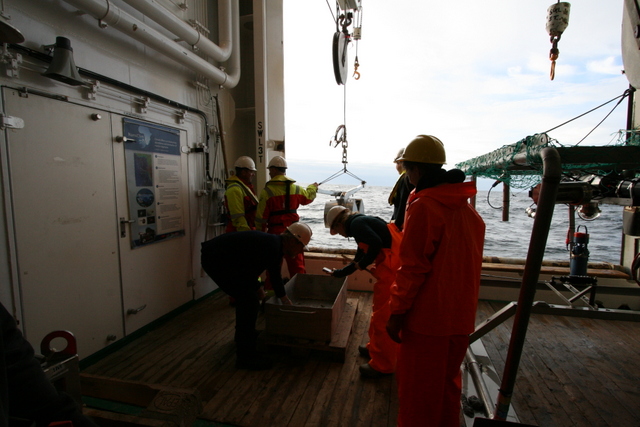
For collecting animals, we are using three main gears: the epibenthic RP-sled, the beam trawl, and the grab. These collect different parts of the fauna, and (together with the video) gives us a fair understanding of the species diversity and composition.

The grab (a van veen) collects a quantifiable amount of animals exceeding 1 mm in size living in the sediment. We collect two grabs at each full station.

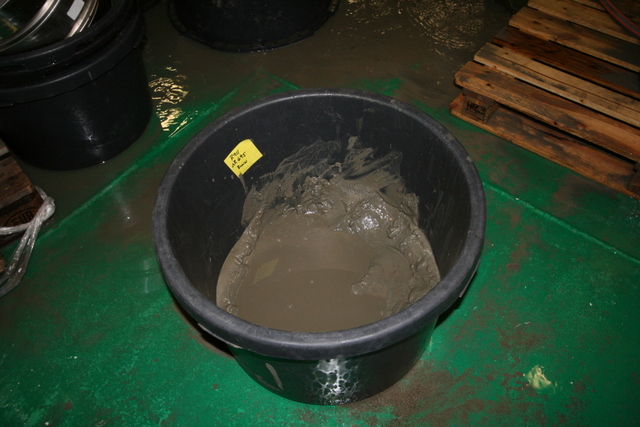
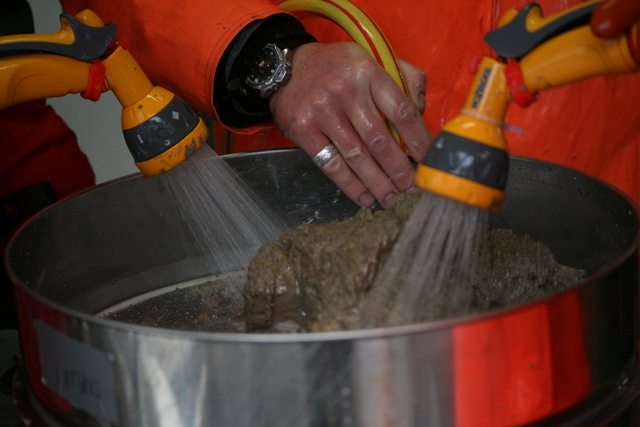
A typical grab sample. We carefully rinse the mud through a 1 mm sieve, collecting the animals within it.

RP sled (left) and the beam trawl. The sled collects the small animals living just above and in the upper layer of sediment. The beam trawl collects the macro- and megafauna living above and within the top layer of the bottom.

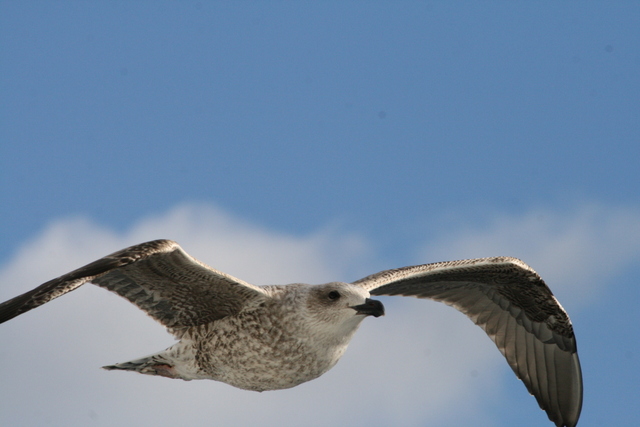
Fulmars and gulls are following us, hoping we’ll give up on the small animals and start catching fish for them
Now we’ve arrived at the next station, so I’d better get going!
Good-bye Greenland!
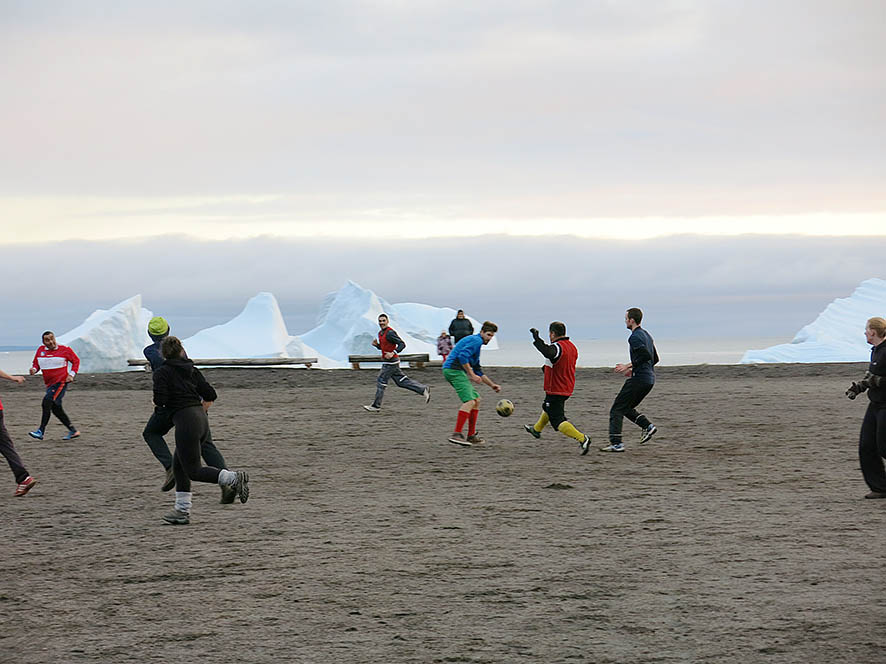
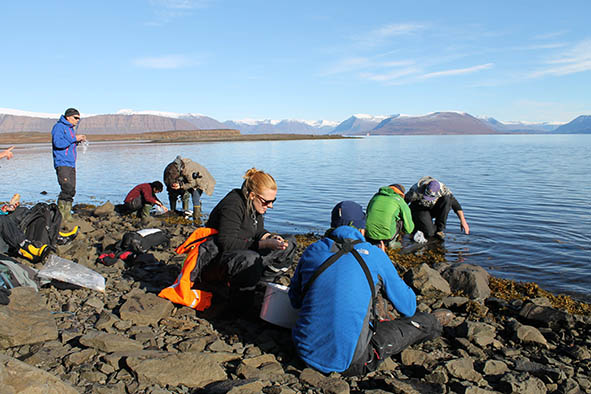
The last days before leaving the Arctic Station were busy: last boat trip, last samples, last possibility for filming work with the underwater-camera. Personal projects to finish, lab to clean, things to pack, and on top of all that: a football match against the Qeqertarsuaq “Old Boys”!
Last days in the lab: full house! The underwater film team: Mette and Jenny

Football match against the Qeqertarsuaq “Old boys”, who turned out to be not that old… and pretty fit!
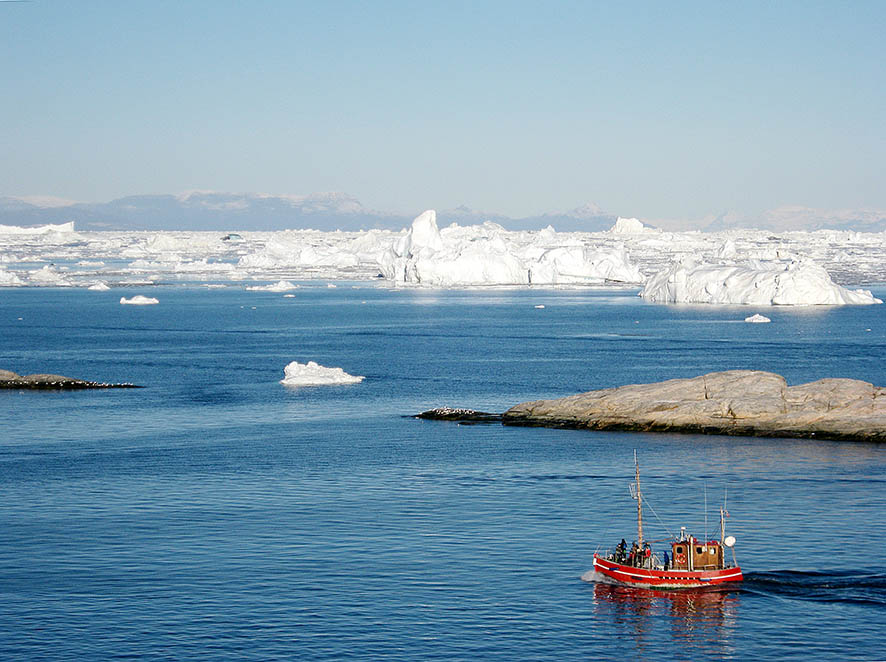
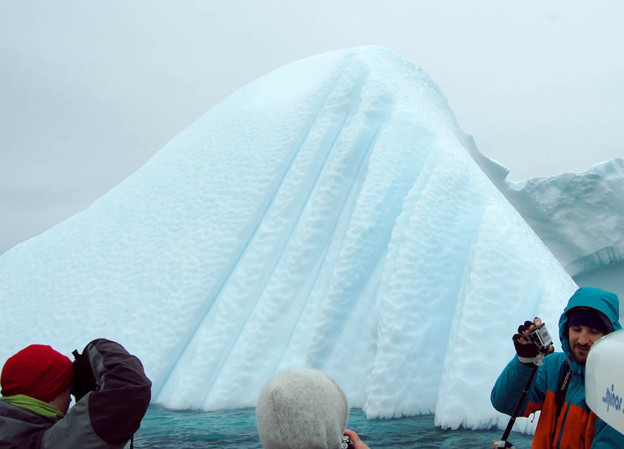
We left the Arctic station on a beautiful sunny day and headed towards Ilulissat, where we spent two days in wait for our flights back to first Kangerlussuaq and then Copenhagen. And beautiful days that was: Ilulissat is known for its icebergs and some of us took an icefjord tour on a handsome, oldish, boat with red paint and wooden deck. And – to our surprise – it turned to be out the old Porsild – the Arctic Station’s former research vessel!

On the way to the ice fjord in Ilulissat – on board of the boat that turned out to be the Arctic Station’s former research vessel (the “old” Porsild!).
Now we are back to our respective homes – wrapping up coursework and getting on with our lives, PhD projects, master theses, scientific work and teaching. But we all agree: this was a very special course bringing us close to Arctic nature and providing us with outstanding possibilities to collect and study Arctic marine organisms. We could both widen our taxonomic knowledge and – in different degrees – even get data that are of direct use for our ongoing research projects.
At the end of this blog, we want to thank all those who helped us during this trip: Ole Stecher and Akaaraq Mølgaard at the Arctic Station, the crew of RV Porsild: skipper Frederik Grønvold and boatmen Søren and Johannes. Also, we are thankful to Reinhard Møberg Kristensen (Univ. Copenhagen) for suggestions concerning sampling sites and use of equipment!
The Research School in Biosystematics (ForBio) is funded by the Research Council of Norway and by the Norwegian Taxonomy Initiative – thanks for making a course like this possible!
And thanks to all of you who have been following us via this blog!
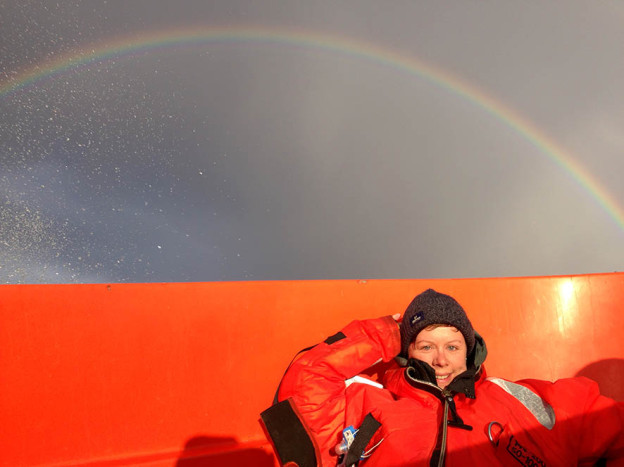
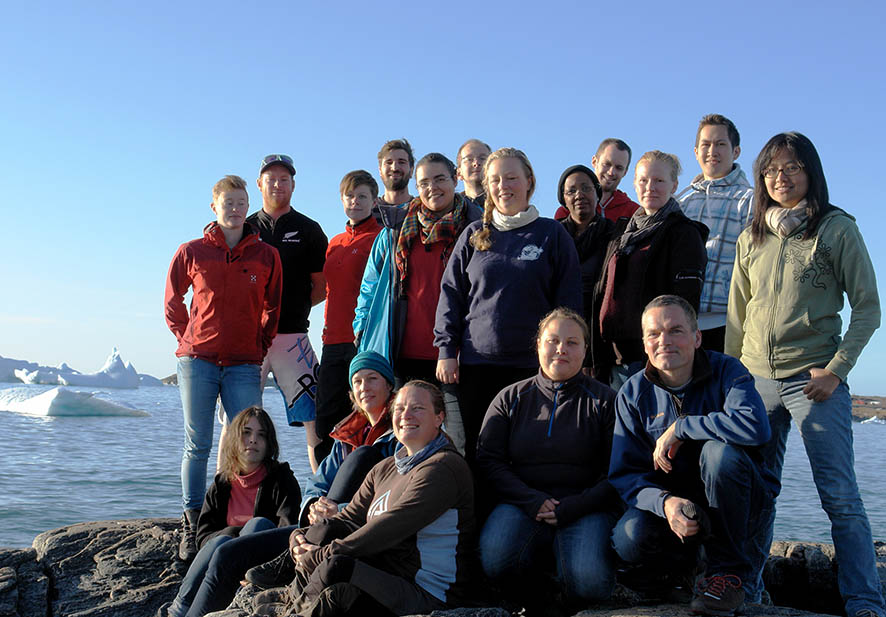
Written by: Christiane Todt (coordinator ForBio, University Museum of Bergen); Featured image: (Jenny) under the rainbow. Photo: Anne-Helene Tandberg
Team blue mussel on the track of the expanding blue mussel in a changing Arctic climate
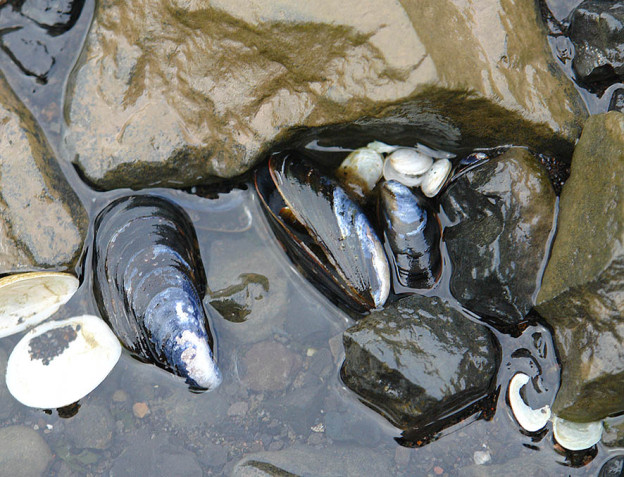
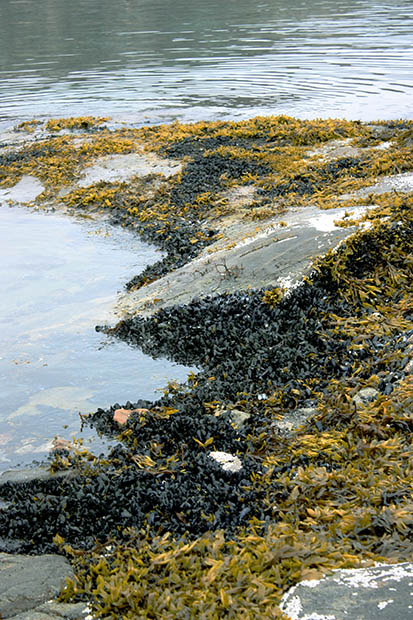
The blue mussel (Mytilus edulis) is on the run, a historical run. Blue mussels are currently expanding towards the North with an unprecedented pace, taking over new areas along the way.
Blue mussel is an ecologically well-studied species that often dominates the coastal zone, where these characteristic bivalves form a specific habitat with a distinct associated fauna. Such habitat formers, which influence ecosystem structure, have a potential for wide impact if they are able to migrate into new areas due to changing climate. With the record increase in ocean temperatures, the blue mussel has already expanded its northern distribution well into the High-Arctic region.
My PhD project at Aarhus University aims to investigate the distribution, abundance and physiological adaptation of the blue mussel along the West Greenland coast. Thus, my participation in the “ForBio marine field course, Greenland” was of central importance for my project. During my “individual project” in the course, more than 4500 blue mussels were collected at several prime locations! All mussels were measured, weighted, and aged by counting growth rings – a work accomplished by the energetic ‘Team Mussel’, mainly consisting of Josefin and me – Jakob. In spirit though, everybody on the course was a part of this amazing team, and I thank them all for helping out by collecting Blue Mussels in Disco Fjord, while I stayed behind at the station for physiological measurements in the quiet laboratory.
In the final days we expanded our project, collecting material for comparing population dynamics of mussel beds in the low and high tidal zone. To catch the low tide, Josefin and I went on a rainy, cold and dark morning to collect mussels. Despite the early hour, lack of coffee, and no breakfast, we returned to the lab in the rising sun with a whole bunch of mussels. Mette and Jenny had finally seen the light and joined ‘Team Mussel’ full time to help getting everything done in time.
All blue mussel data collected during this course will be used to increase our understanding of the ecological consequences of the expanding blue mussel in the Arctic. By comparing population dynamics and macrophysiology among populations found at Nuuk, Disko Island, Upernavik and Qaanaaq, our studies will allow us to better understand the direct (and indirect) impacts of the changing Arctic climate. Eventually, we hope to expand our knowledge of how species susceptible to expand their current distribution range will influence current ecosystem structure and function in a warmer future.
By Jakob Thyrring (Aarhus Universitet)
The “Greenland Big Five”
Obviously there are no lions, rhinos and zebras in Greenland – and polar bears are seen on Disko Island extremely rarely. Thus we had to create our own categories for a “best of” photocompetition:
1. Best iceberg
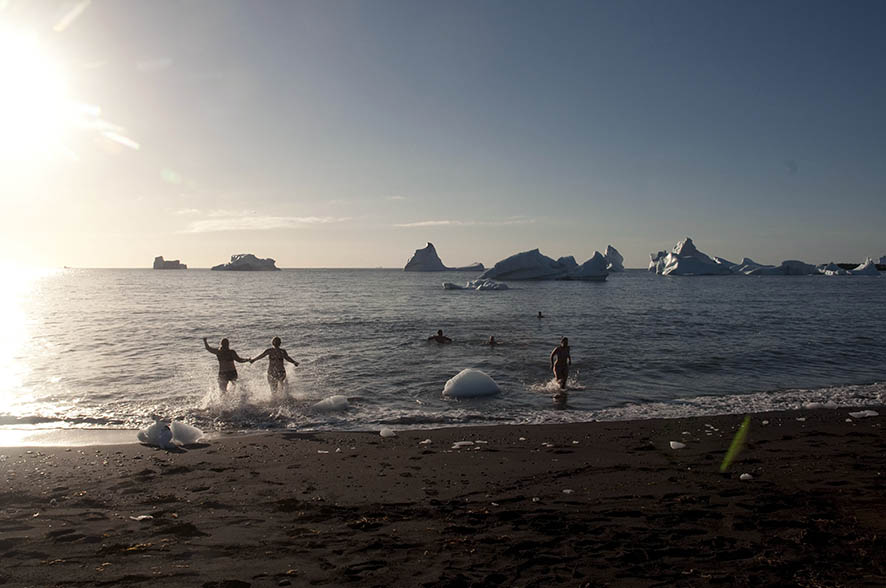
Our September stay has exposed us to never ending varieties of iceberg beauties, and catching the right angle and the right light has occupied our master photographers on boat rides and on trips to the beach near to the Arctic Station, which is where many an iceberg ends their existence.
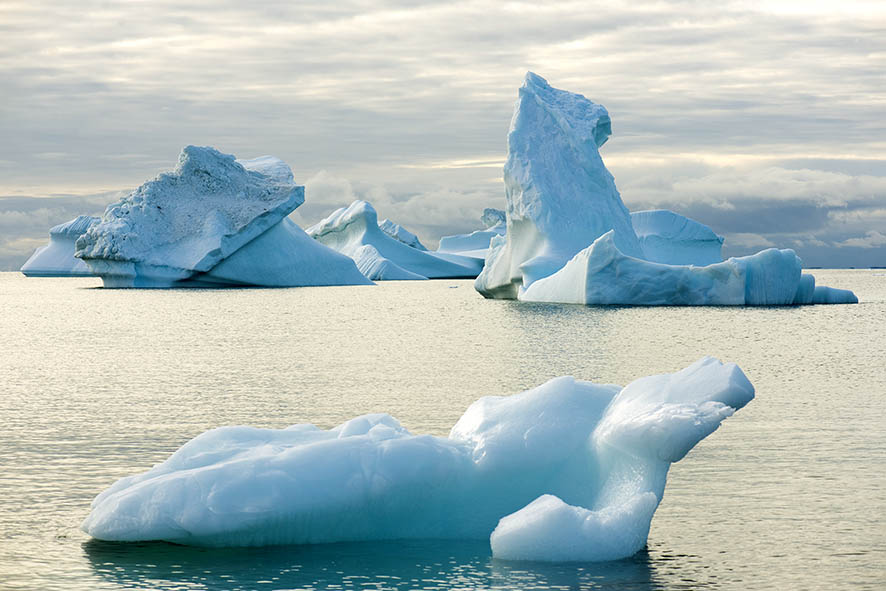
Icebergs, icebergs, icebergs – the vote for best iceberg photo fell on this one! Photo: Andreas Altenberger
2. Best whale
On our trip to the Arctic Station we had a stopover in Aasiaat, where a whale watching trip was one of the highlights. We followed a group of four humpback whales, icluding a “youngster”, for some time and they were really cooperative by coming close and showing different aspects of flippers, backs, and flukes.
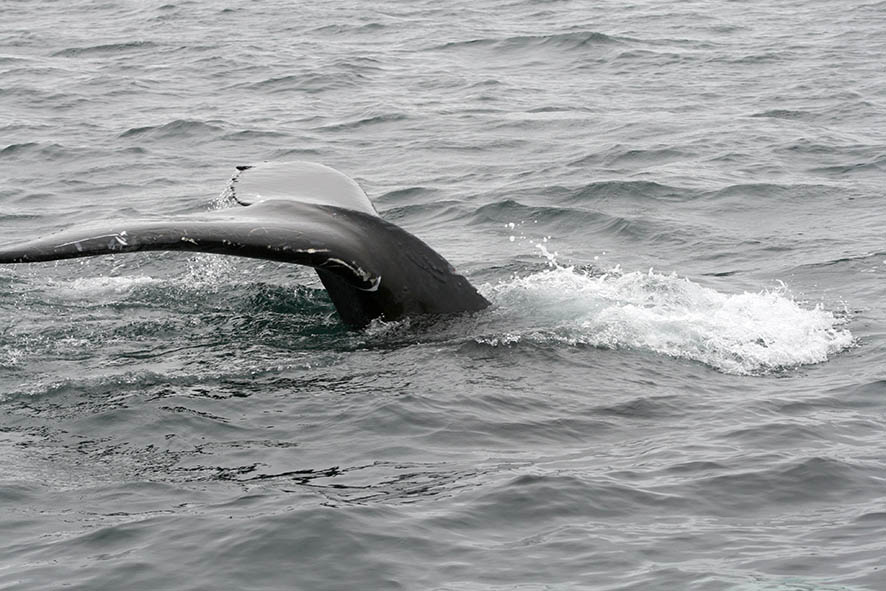
One of the Aasiaat four – Jenny caught the moment just before the whale was diving down close to our boat. Photo: Jenny Egardt
3. Best polar light
Seeing polar lights was a “first time” for a number of us – thus Andreas and his “polar light app” were checked as regularly as the night skies. And then – at last – polar lights! But not all cameras showed to be equally useful…
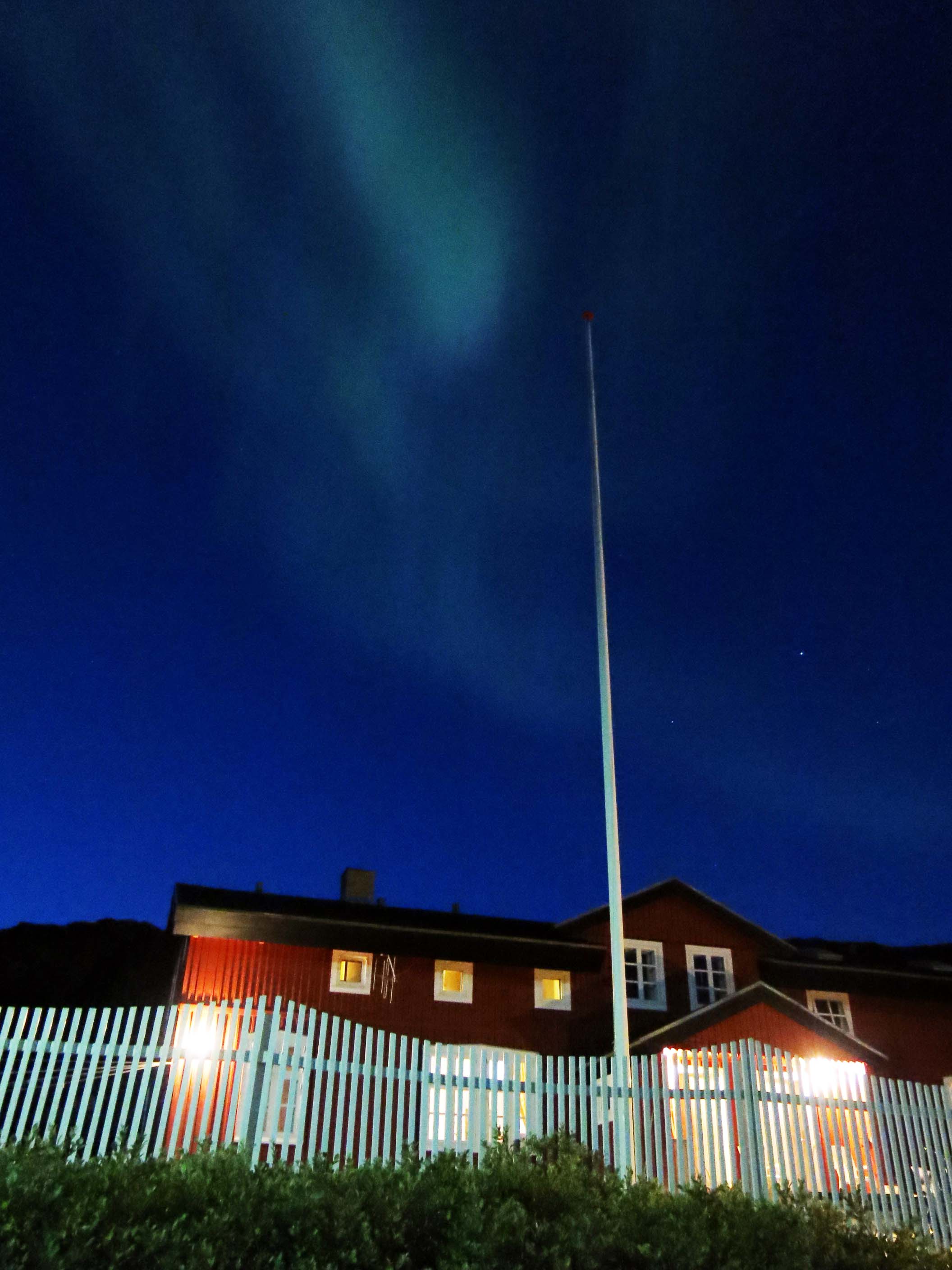
After a few nights in Greenland the conditions were perfect: Northern lights over the Arctic Station! Photo: Arom Mucharin
4. Best sledge dog (puppy)
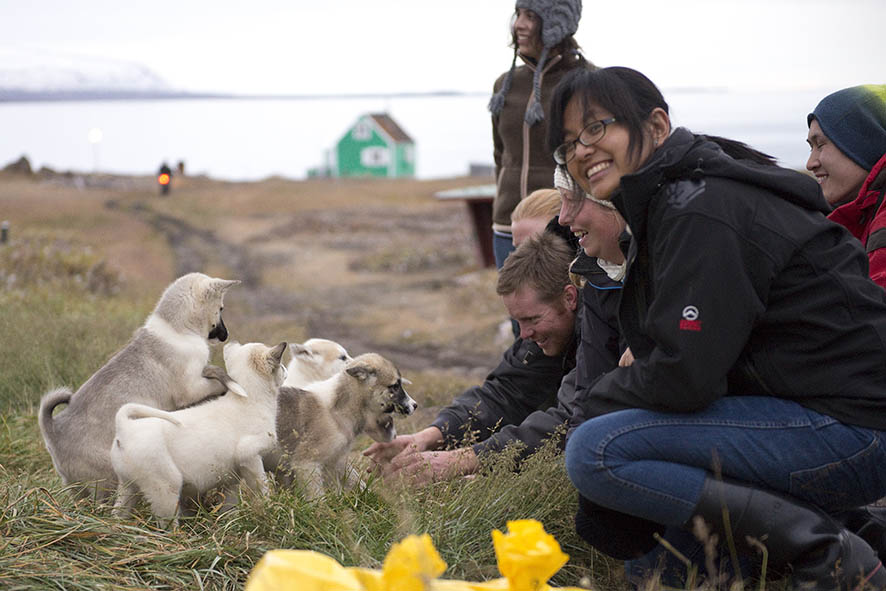
Sledge dogs are ever-present in Greenlandic towns and villages. The adult dogs have to be chained to prevent them from roaming around and harm each other or even people. The young ones, however, can enjoy their lives and even though they usually are very cautious towards strangers, they are also curious. And incredibly cute!
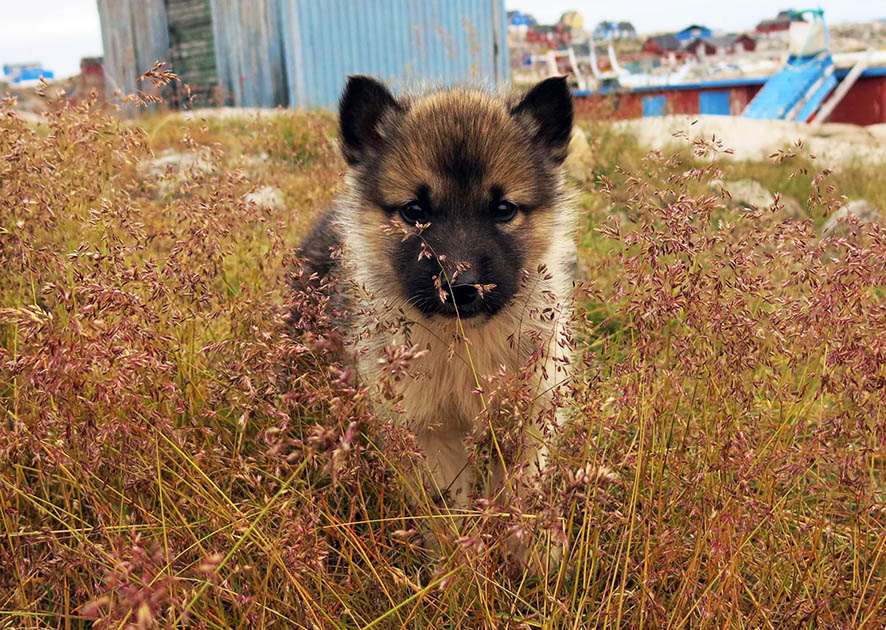
In Aasiaat, before even arriving at the Arctic Station, Arom met this cutie and managed to catch his interest. Photo: Arom Mucharin
5. Best Greenlandic fisherman/hunter
We found out that Greenlanders are not necessarily happy about being photographed by tourists – like us. But getting to know them changes this considerably – especially if boats, fishing, or hunted-down seals are involved. Therefore our last category: Greenlandic fisherman/hunter.
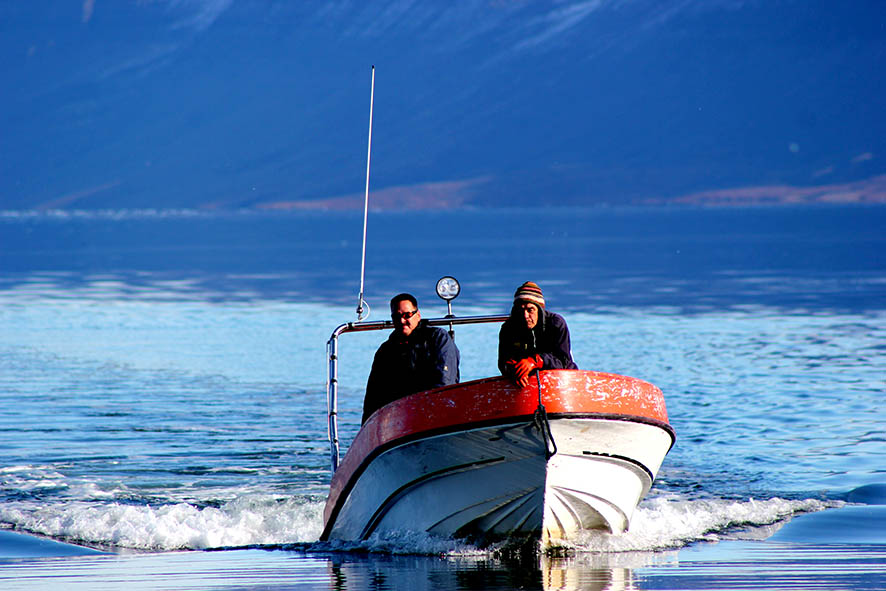
Johannes and Søren – our two boatmen on the trip to Disko Fjord – in action on Arctic Station’s “jolle”. Johannes impressed our guys with unseen-before fishing and hunting abilities, and the ownership of a most striking mustache. Photo: Peter Kohnert
Finding the best
For this photo competition, everybody could hand in their best photo for each category and everybody could vote. In total there were 35 submissions. Arom (2 “best photos”), with her relatively simple compact camera, showed that often it is the choice of motive and not the advanced equipment that makes a good photo! Congratulations!
But of course there were lots and lots of great photos also outside the categories and finally combining all photo material added up to more than 50 GB (!!) of photo material!
Written by: Christiane Todt (University Museum of Bergen)
Featured image: Iceberg hunters with their prey, by Henning.
Sculpin fishing in Greenland
As a PhD student from the University of Gothenburg researching gastrointestinal motility and blood flow in fish, you may wonder how did this man arrived in Greenland on a Forbio marine field course!! Well, let me explain……..
Gastrointestinal motility and blood flow in fish can be affected by a range of abiotic (e.g. temperature) and biotic (e.g. diet) factors. As part of my doctoral research I video record the movements of the gut and produce spatio-temporal maps allowing me to qualitatively and quantitatively characterize gut motility patterns in vivo in fish. Using this method I want to investigate the effects of diet and temperature on gut motility patterns in a fish species called shorthorn sculpin (Myoxocephalus scorpius). However, before I can experimentally test the effects of different compositions of fats, proteins and carbohydrates in food on motility patterns I need to know the natural diet of these animals…….and thus, much to my joy and excitement, we arrive at Disko Island, one of the more northern areas in the geographical distribution of shorthorn sculpin!!!
Due to strict luggage regulations I was unable to bring my ultimate sculpin-catching device (fishing rod) and instead had to arm myself with a 50 DKK handline from the local supermarket, which made things increasingly difficult (that was my excuse anyway!!). After numerous failed attempts at a range of beautiful locations, my total catch included a piece of seaweed, 4GB of wicked photos, no hooks and sinkers left, and my pride was taking a severe dent as people were now sarcastically referring to me as the ‘master fisherman’. Eventually through a combination of the stars aligning and the purchase of a ‘lucky hook’, the fish started biting….hallelujah!!!! After the slightly messy business of extracting the stomach contents from the individual fish back at the lab, it was time to identify what these animals feed upon.
Luckily for me there was an abundance of excellent taxonomists on the course to help me identify the semi-digested prey items. Thus without further ado……. they feed upon pretty much everything they could get their ‘hands’ on!!!!! This included gastropods (Littorina saxatilis, Littorina obtusata, Margarites groenlandicus), polychaetes (family Glyceridae), amphipods (fam. Caprellidae and Gammaridae), chitons (fam. Leptochitonidae), molluscs (Mytilus edulis), shrimp (Pandalus borealis) and big blocks of nicely cut up seal blubber (which was the bait of choice!!).
Thus in conclusion……shorthorn sculpin are opportunistic feeders and will utilize a range of different prey items to satisfy their metabolic demands. Now that I have arrived back in Sweden, armed with new skills and knowledge on invertebrates, I would like to do a similar study on the shorthorn sculpin residing on the west coast of Sweden to compare differences in diet of the two different populations, which will make up an integral part of my PhD thesis.

Not a sculpin…but a halibut!!!…..a predator of the sculpin as we found a whole sculpin inside the stomach!!!!
All in all it was an amazing adventure which I will not forget and I strongly advise any students to take part in future courses!!!!!!!
Signing out……..Jeroen Brijs (Gothenburg University)