Monthly Archives: April 2024

Project kick-off; Lower Heterobranchia and Pyramidellidae of Norway

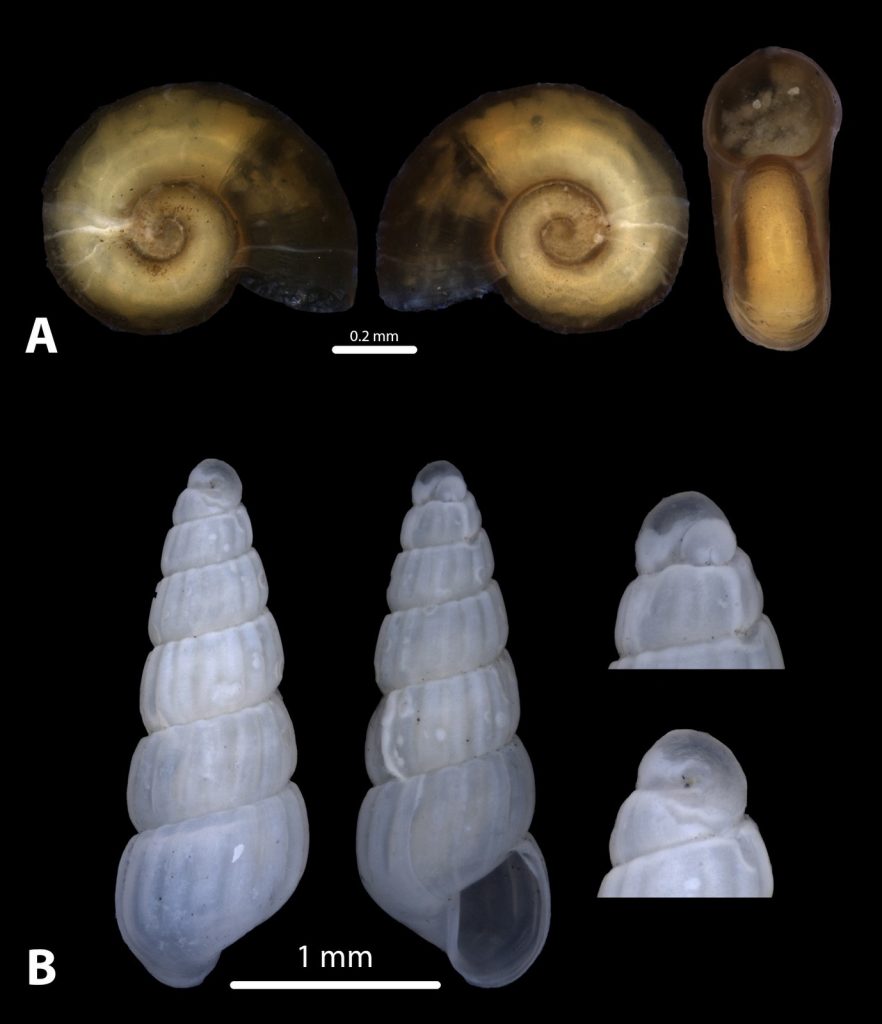
Since September 2023, a new taxonomic project started at the University Museum studying the biodiversity of sea snails (with shell) and sea slugs (without (visible) shell) in Norwegian marine habitats. This project is in a way a follow up from the “Sea slugs of Southern Norway” project between 2018–2020, but this time with a focus on poorly studied habitats including seagrass meadows, maerl coralline algae beds and landlocked fjords (“polls”). The target groups of this project are tiny sea snails of just a few millimeters, which are part of a group called “Lower” Heterobranchia and Pyramidellidae (Image 1) that together with the former ophistobranchs (e.g. the sea lugs), and pulmonates (slugs and land snails) form the Heterobranchia, one of the main evolutionary lineages of the Gastropoda.
Snail shells on a black bacground

Image 1: Example of shells of a “Lower Heterobranchia” (A) and a Pyramidellidae species (B). Picture CRauch & MMalaquias.

The diversity of these tiny sea snails is poorly understood in Norway. Currently, nine families are known in the country: Acteonidae, Cimidae, Mathilidae, Murchiconellidae, Omalogyridae, Rissoellidae, Tjaernoeiidae, Xylodisculidae and Pyramidellidae (Høisæter 2014), but their small size and similar shells make it challenging to identify the species. During this project these sea snails will be studied in Norway for the first-time combining DNA barcoding and morphology. Sampling will be based on the use of dredges, grabs, and snorkeling by collecting the substrate they live on.

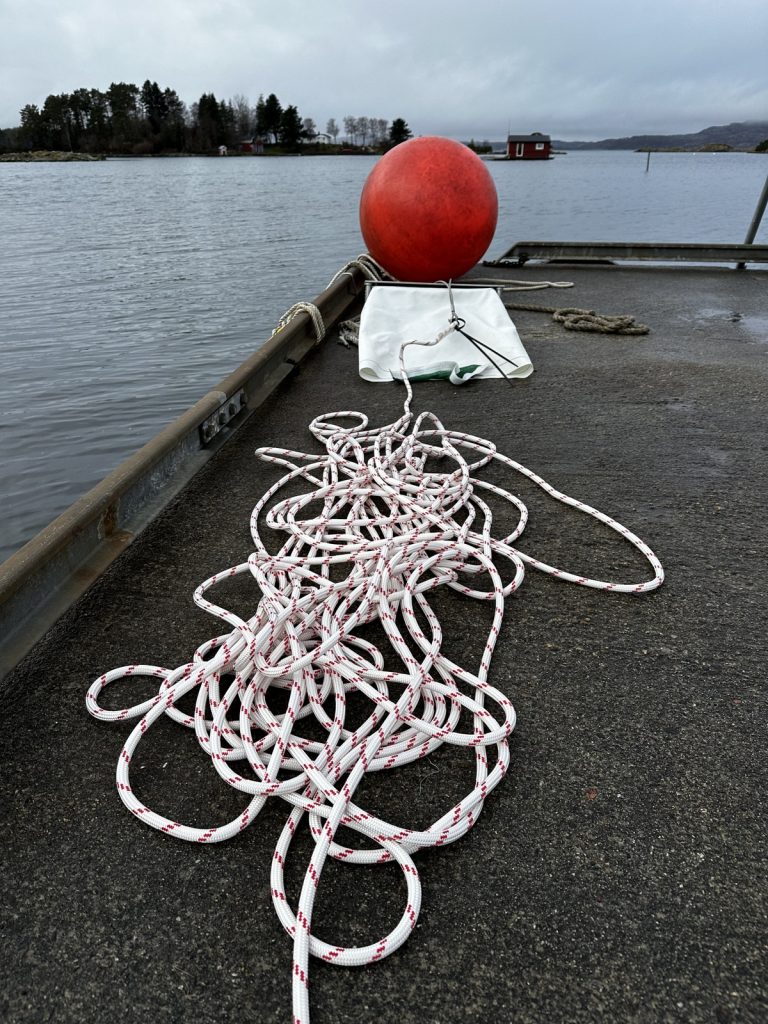
Pyramidellidae are ectoparasites and are often found living on other molluscs or other marine invertebrates, but also on soft sediments. The University Museum of Bergen has already a good collection of “Lower” Heterobranchia and Pyramidellidae from Norway, but a large part of this material is not suitable for DNA extraction due to the original fixation methods based on the use of formaldehyde. Therefore, after the first months of cataloguing the “old” collection and setting up protocols for DNA extraction, we finally set out in February to collect fresh material. We visited two different sites around Bergen to try out collecting specimens by snorkeling and test the efficiency of a recently acquired portable hand-dredge (Image 2).
A small metal dredge, rope and a buoy on a dock

Image 2: The hand dredge which was used for collecting specimens. Picture MMalaquias.

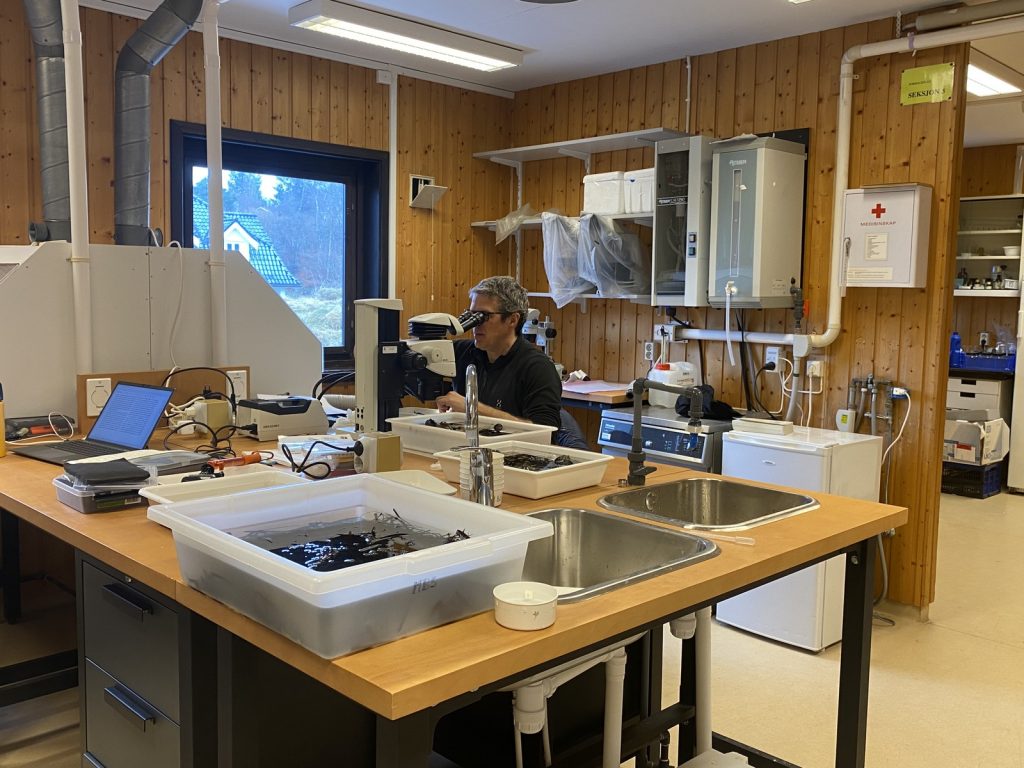
Our first fieldwork day took place at the Marine Biological Station of UiB at Espegrend. The field station is a convenient place as it features a fully equipped laboratory (Image 3), and just in front of the station there is a seagrass meadow dominated of Zostera marina. This eelgrass is often found in shallow and sheltered coastal areas between 0.5 m to 10 m depth on flat sandy bottoms. Seagrass meadows are diverse and productive and can harbor hundreds of associated species from many different groups of animals. One team member swam with the dredge over the seagrass meadow and dropped it about 30 m from the shoreline, while the other team member pulled it back by hand. In addition, substrates like algae, blue mussels, and ascidians were hand-picked by snorkeling.
A scientist in a lab, looking in a stereo microscope

Image 3: First fieldwork for the new project, with project leader Manuel Malaquias behind the stereomicroscope searching for sea snails and slugs at Espegrend Marine Biological Station. Picture CRauch.

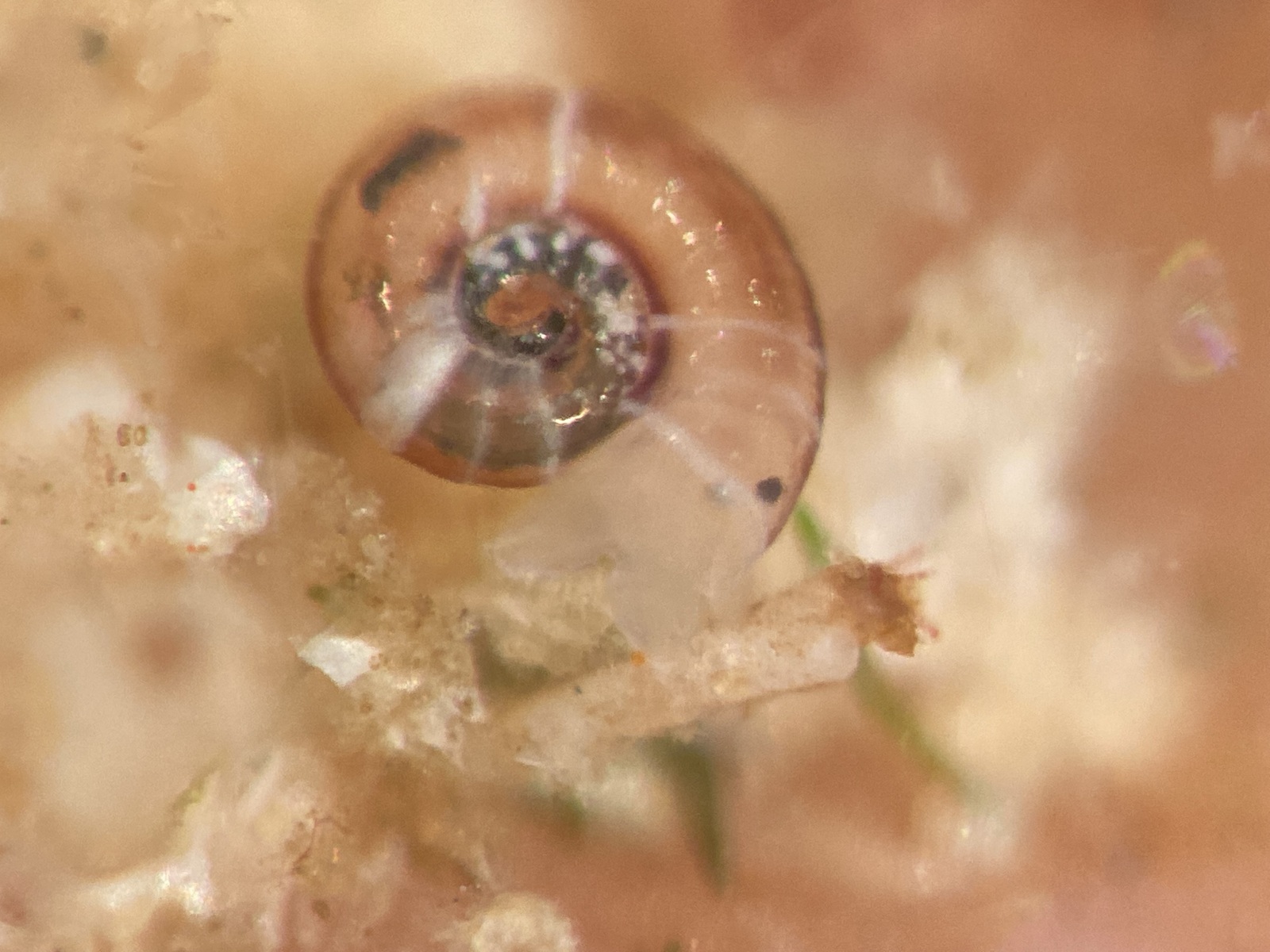
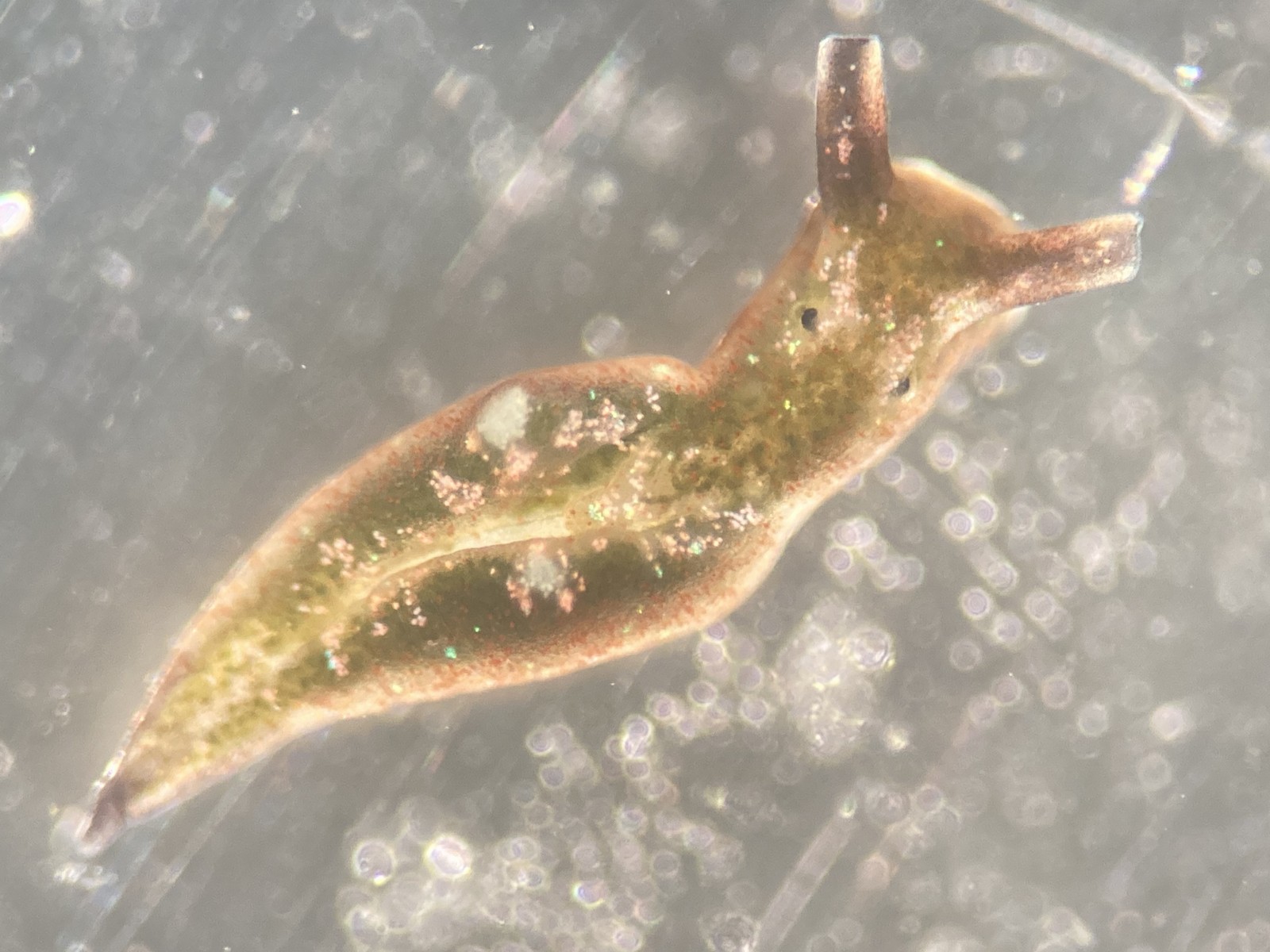
These efforts yielded the first specimens, namely the “Lower” Heterobranch species Ammonicera rota (Image 4) and the sea slug Elysia viridis (Image 5).

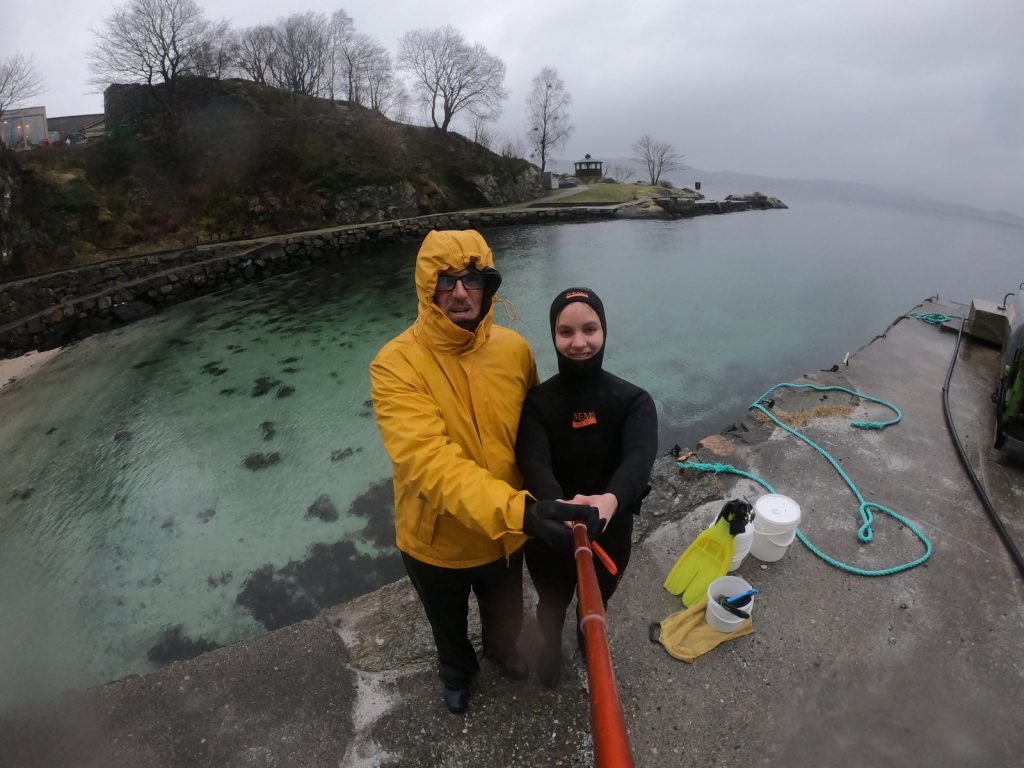
During our second sampling event, because of bad weather conditions with strong southern winds, we decided to visit a sheltered popular swimming area (although at this time of the year not so popular!) located north of Bergen called Helleneset (Image 6). Helleneset is a rocky shore area rich in algae and kelp with sand flats in between.
Two people on a pier in wet weather

Image 6: Second fieldwork trip, at the popular swimming area called Helleneset, on a wet and cold February day deserted. In the picture Manuel Malaquias and Cessa Rauch. Picture CRauch & MMalaquias 

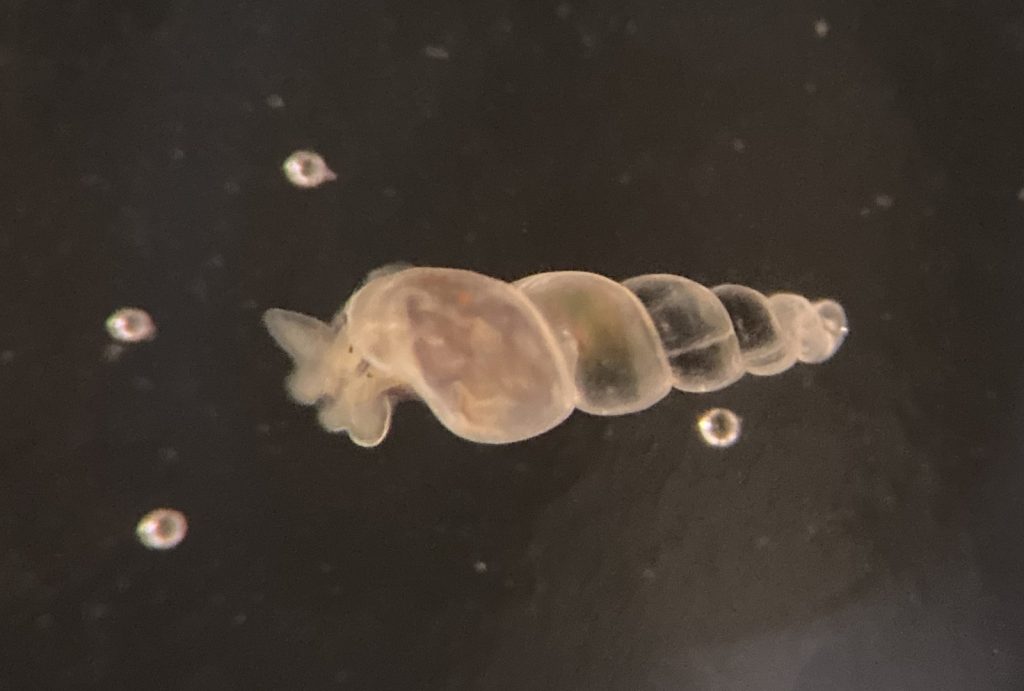
This time the algae and kelp mats collected by snorkeling in ziplock plastic bags did not yield much, but a close examination of the sand (with help of stereomicroscopes) collected again with the hand-dredge revealed the presence of many little gastropod snails. One of these little snails was our first Pyramidellidae; the identity is not yet completely confirmed, but it looks like Eulimella ventricosa (Image 7).
a small shelled gastropod on a black bacground

Image 7: A Pyramidellidae found from Helleneset, a possible Eulimella ventricosa. Picture MMalaquias.

These two first samplings days were a good test for how we best can collect these snails which are small and in general a little abundant. The dredge is easier to operate with two people working together; one to deploy it and the other to pull it back to shore. Sandy samples yield better results if left to rest for several hours and even days in trays or buckets because anoxic conditions begin to form, forcing the animals to crawl out of the sediment.

This is just the beginning, if you want to be part of the journey of the diversity of “Lower” Heterobranchia and Pyramidellidae in Norway, we will be regularly updating stories and findings on this channel, and our social media accounts @SeaslugsofNorway (both Instagram and Facebook), see you there!

___________________________________________________________________________________________________

References

Høisæter, T. 2014. The Pyramidellidae (Gastropoda, Heterobranchia) of Norway and adjacent waters. A taxonomic review. Fauna Norvegica, 34: 7-78.
One Ocean Week 2024

the banner for OOW seen outside the University museum

From April 13th to 19th 2024, the Ocean City of Bergen celebrated the ocean even more than usual(!) in a happening called One Ocean Week (OOW).

One Ocean Week held conferences, meetings, workshops and activities – aiming to pioneer a sustainable use of the ocean.

The marine group at the University Museum was a prolific participant during the event, here are some of our contributions!


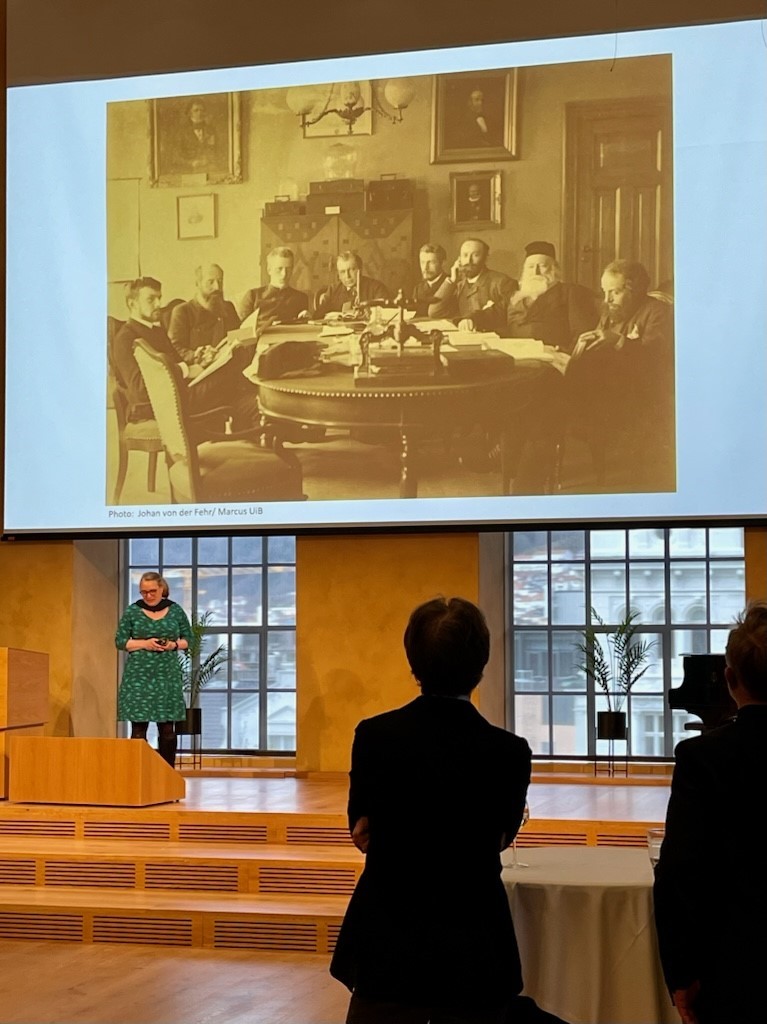
Anne Helene was invited to give the opening talk at the reception in the Aula, placing the Museum and Bergen into the heart of the Norwegian ocean exploration beginning with “The Norwegian North-Atlantic Expedition 1876–78”.

researcher giving a presentation

Anne Helene giving the opening talk during the festivitas in the Aula at the University Museum. Photo: Jenny Smedmark

Screenshot from the documentary. Do follow the link -> to watch if you haven’t already! Photo: OceanX


Aino also made a guest apperance in the aula as the documentary about “Seeing jellyfish as they should be seen” made by the OceanX media team was shown.


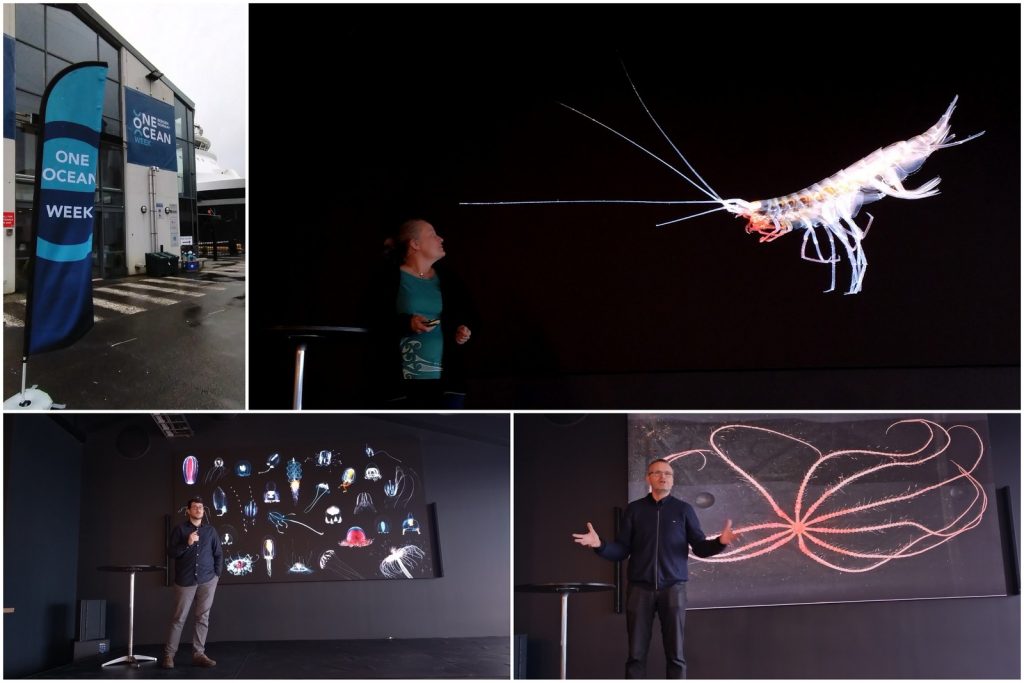
Saturday brought a presentation at Skolten about the UiB/OceanX-expedition last August, where Joan and Anne Helene presented some of their exciting new findings together with Henrik and Øyvind from BIO – and even Mattie of OceanX participated, calling in from the OceanXplorer in Singapore!

Presentations of what we found during the OceanX/UiB cruise last summer, where we explored old locatlities in the Norwegian Sea, and visited some of our fjords using the world’s most advanced research vessel. Pictured are Anne Helene, Joan and Henrik – with their animals! Photos: Katrine Kongshavn

On Sunday the 14th most of us were at Festningskaien with a plethora of activities during the “Family Day”.

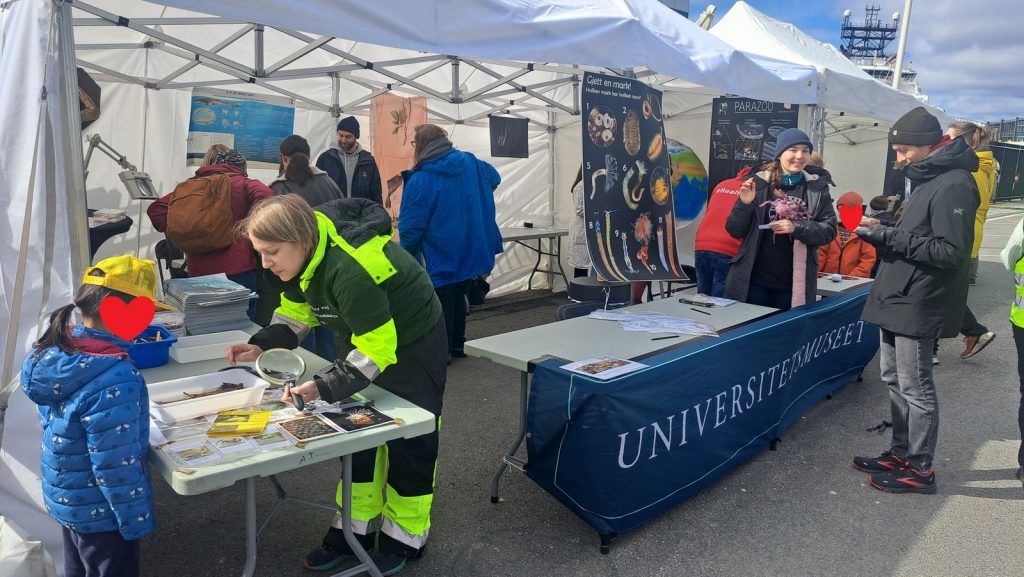
Our tent at the Family Day. Photo: Joan J- Soto-Angel

For our “Meet marine biologists from the University Museum” we brought with us five activities focusing on different areas of research that we do.

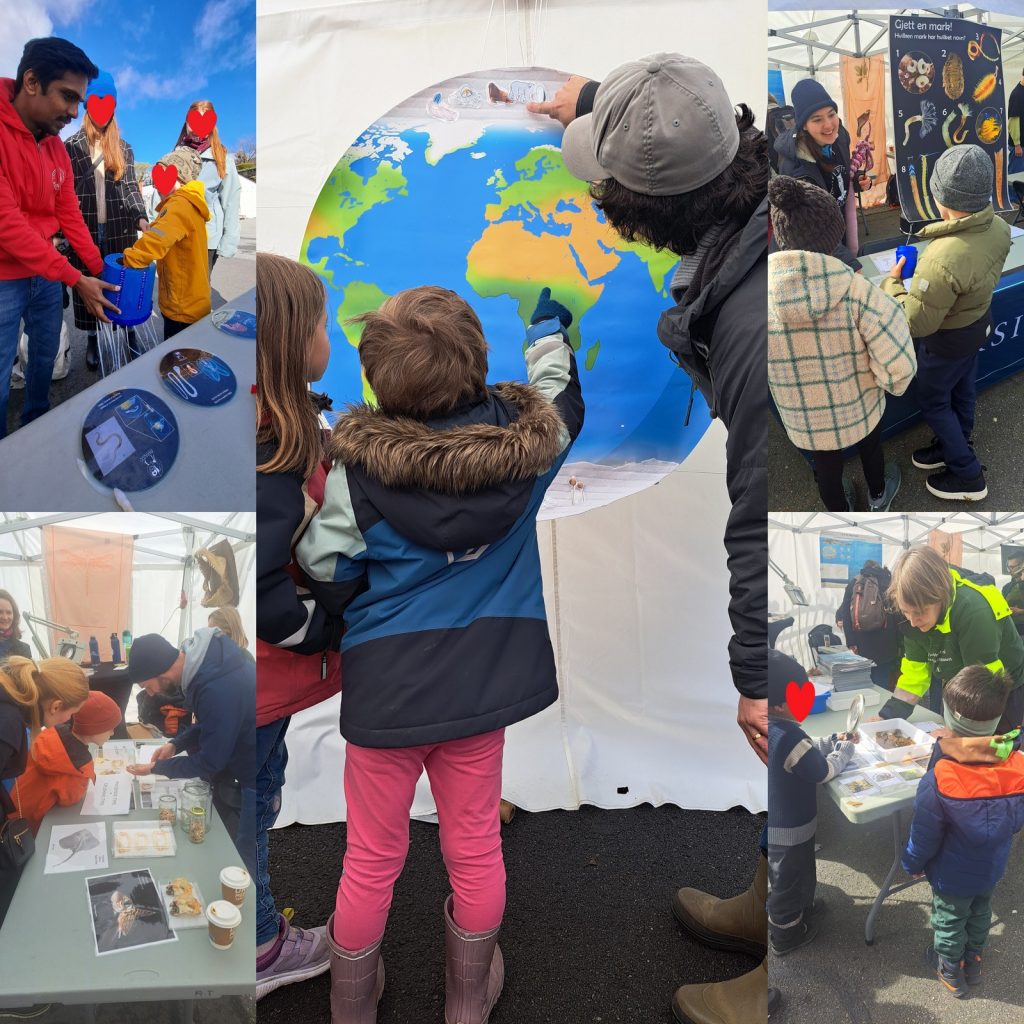
We had:

  • Sharks (see SharkReferences.com for more), with a shark tooth quiz, info about sharks in Norway, and the chance to see shark skin up close.
  • Bipolar animals (project Pole2Pole) where people could explore the distribution of animals that occur in one- or both- of the poles, and learn more about why that may be the case
  • Polychaetes (project MAnDAriN) with a quiz of trying to match images of colourful bristle worms to their common names
  • A task on Jellyfish parasites(!) (project ParaZoo) where you were to diagnose which parasite our unfortunate jellyfish suffered from, and finally
  • Moss animals (project NorDigBryo) where you could learn more about these animals, see them up close, and pick up a booklet with fun facts and some riddles to solve.

    Our activities. From top left: Jellyfish doctor, bipolar animals, guess the worm, sharks, and moss animals. Images: Joan J. Soto-Angel

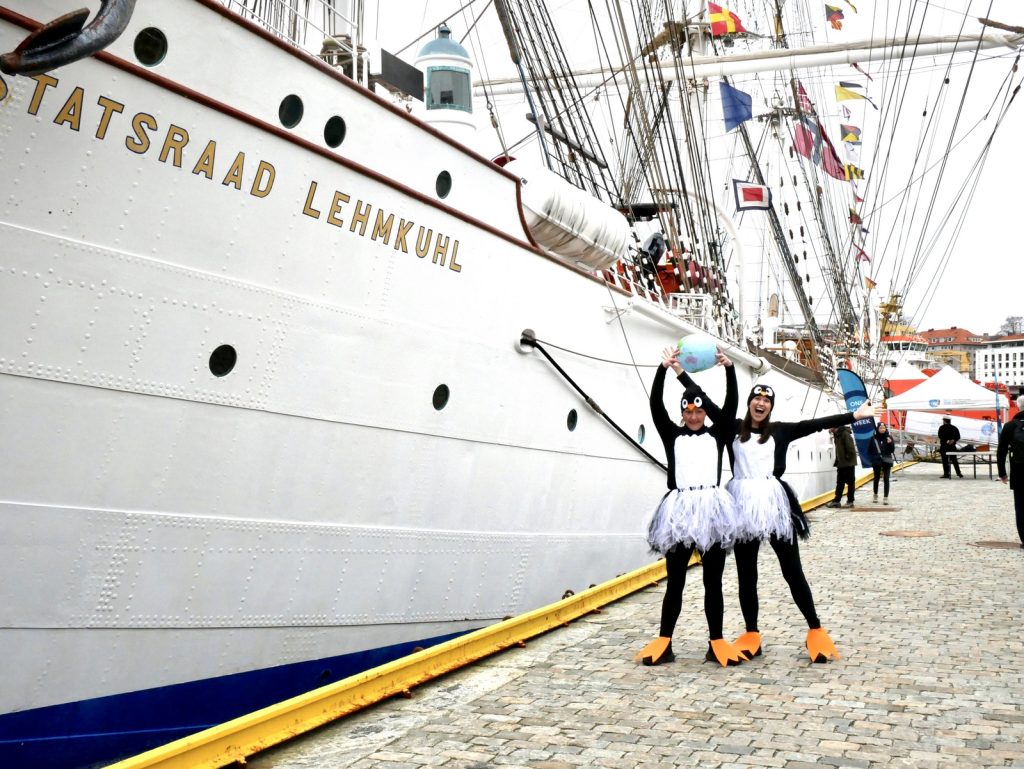
    Two of the museum pedagogues used our tent as the base for their theatre-based activity “The ice is melting! It is for real!” – so we had penguins too!

    The penguins Piia and Pling in action. Photo: Odette Tetlie

    At the Natural History Museum, our researchers offered free talks on topics of their choice; one talk every day (Tues-Fri). The topics covered here were:

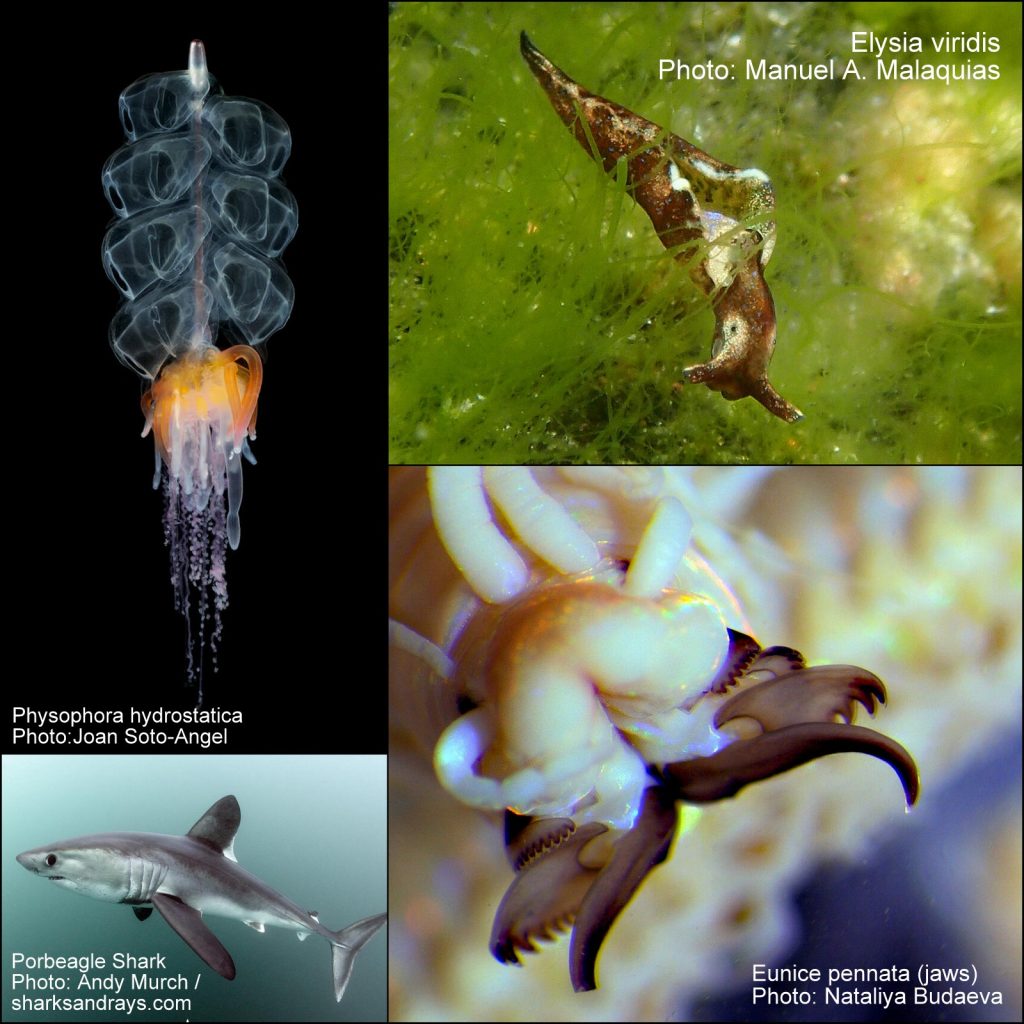
    Who eats whom? Marine worms with jaws – delicious and dangerous! (Nataliya)
    Jellyfish in Norway – mostly harmless or murderous monsters?
    (Aino)
    Sharks of Norway
    (Nico)
    Elusive biodiversity: a journey through the less known but most exquisite groups of marine animals (
    Manuel)

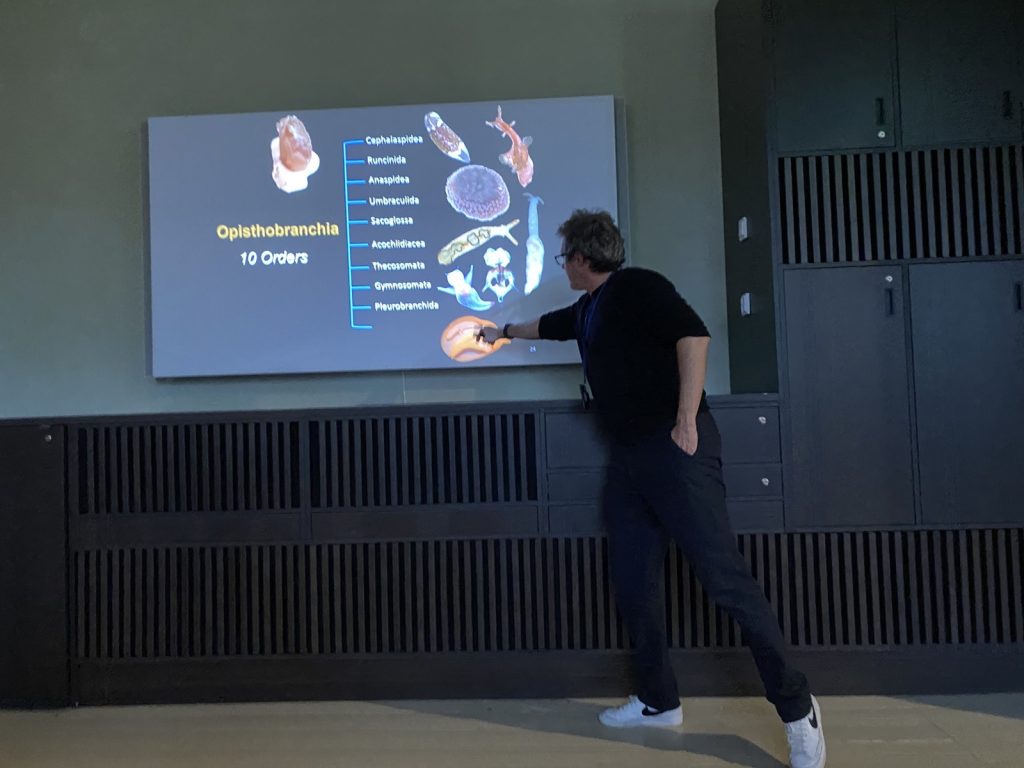
    a person pointing to a phylogenetic tree showing gastropods and how they are related

    Manuel during his presentation at the Natural History Museum. Photo: Cessa Rauch

    Nico also gave a talk at the scientific conference Ocean Outlook: the North Atlantic Ocean climate, deep sea and environment, on the topic “Bioluminescence in deep-sea sharks: evolution and functions.

It was a hectic, but fun week!

-Katrine on behalf of the marine group

How do you show something nearly invisible?

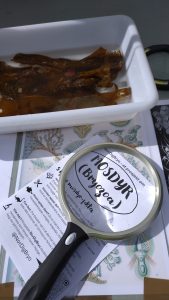
a magnifying glass lies on top of booklet with the heading Bryozoa

Katrine ran an activity on moss animals – Bryozoa – during the Family Day of OneOceanWeek in Bergen and part of our three-museum collaboration project NorDigBryo – Digitizing Norwegian Bryozoa.

The full text in English is out now on the NorDigBryo project blog, and the Norwegian version can be found here – check it out!

And make sure you are following our Moss animal adventures on Instagram: @NorDigBryo

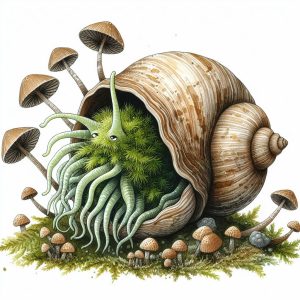
A fantasy animal that looks like a cross between a snail and a nautikus covered in moss, with some bonus mushrooms on it, created with AI

Here is what an AI generated “moss animal” may look like – it not *quite* how they look in reality! Made with DallE.

Free seminars at the University Museum during OneOceanWeek

Make sure to check out the seminars that are happening this week (April 16th-19th)!

Researchers from the Department of Natural History give 30 minute lectures on selected topics in the marine realm each day at 14:00, read more about it here!

LINK: https://www.uib.no/en/universitymuseum/169739/welcome-one-ocean-seminars-university-museum

Topics, dates and times:

Who eats whom? Marine worms with jaws – delicious and dangerous! 16.04.2024 – 14.00–14.30

Jellyfish in Norway – mostly harmless or murderous monsters? 17.04.2024 – 14.00–14.30

Sharks of Norway 18.04.2024 – 14.00–15.00

Elusive biodiversity: a journey through the less known but most exquisite groups of marine animals 19.04.2024 – 14.00–14.30

Where: Natural History Museum (Forhandlingsrommet), at Muséplassen 3 (use the main entrance of the Museum).

Free entrance, pick up your ticket from the museum gift shop 15 minutes before start.

My internship at the University Museum of Bergen (Alina)

Hi, I am Alina Lösing, a bachelor’s student from Germany with the great opportunity to join the Cnidaria and Ctenophora team from the University Museum of Bergen for a 6 weeks Internship. This experience was not only a chance to further strengthen my passion in marine biology but also very helpful to gain valuable insight into research and museum operations.

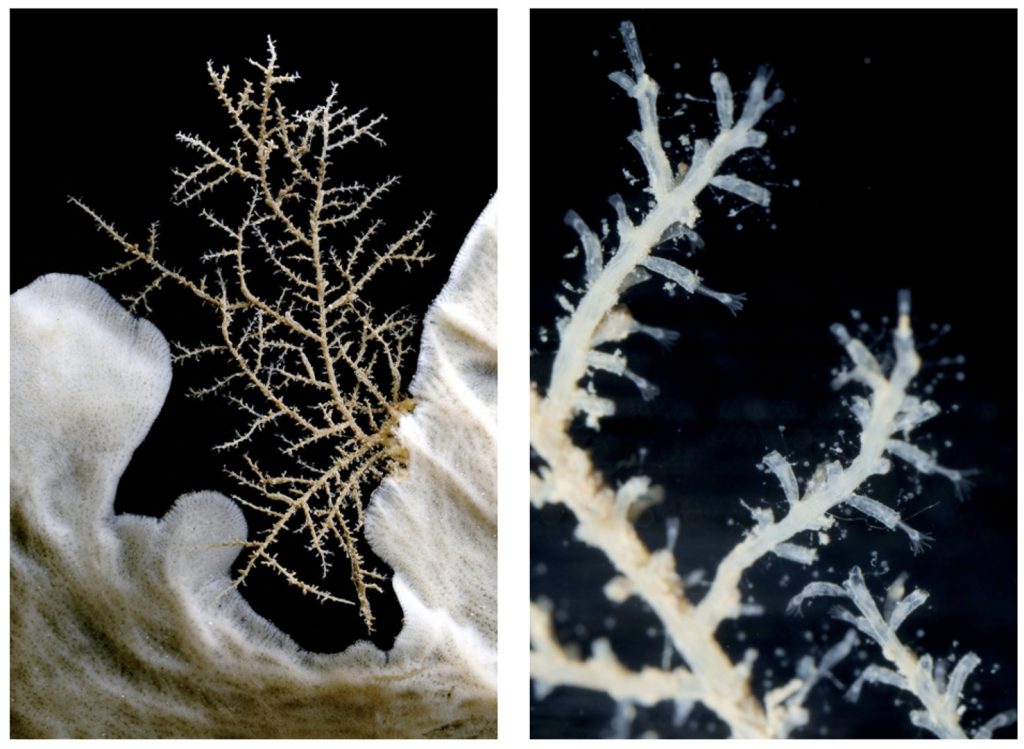
During my time at the museum, I had the chance to join various projects of Joan J. Soto-Angel, including POLE2POLE (Horizon 2020, MSCA) on bipolarity, and Artsprosjektet NoAH (Artsdatabanken) on Norwegian Arctic Hydrozoa. I even had the honor to contribute a small part to it! I focused mostly on the polyp of Stegopoma plicatile, a supposedly widely distributed species present also in both Arctic and the Antarctic waters.

On black background branching animals looking a bit like corals

Figure 1: Living specimen of Stegopoma plicatile collected during the OceanX cruise at 240 m depth (Pictures: Joan J. Soto-Angel)

The first step was to take pictures of the different specimens that were sampled and categorized as Stegopoma plicatile. Further I took pictures of many other species of Arctic hydrozoan polyps and hydromedusae. I learned some useful tricks with the camera while photographing the different species of polyps and medusae.

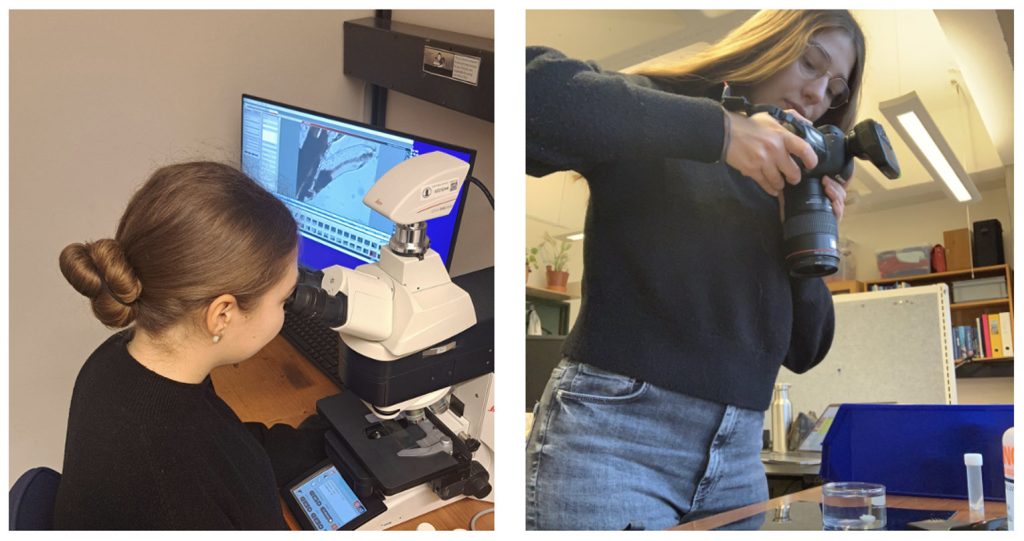
Part of the project is developing a reliable workflow which allows for a morphological distinction between polyps belonging to potentially different species previously defined molecularly from different areas worldwide. Therefore, I spent a lot of time working with the microscope collecting data which can be crucial to refining the morphological differences between different species. I measured length and width of 380 nematocysts!

The author working in the lab; seen using a microscope with camera on top, and holding a DSLR camera

Figure 2: Taking pictures of the samples with the microscope and the camera (Pictures: Joan J. Soto-Angel)

Furthermore, I underwent training in tissue sampling, a crucial step in preparing the samples for DNA sequencing. It’s all about preventing tissue contamination! Moreover, I had the opportunity to visit the DNA Lab, where I received instruction in their specialized techniques for DNA extraction, PCR, and electrophoresis. Many thanks Cessa for your time and dedication!

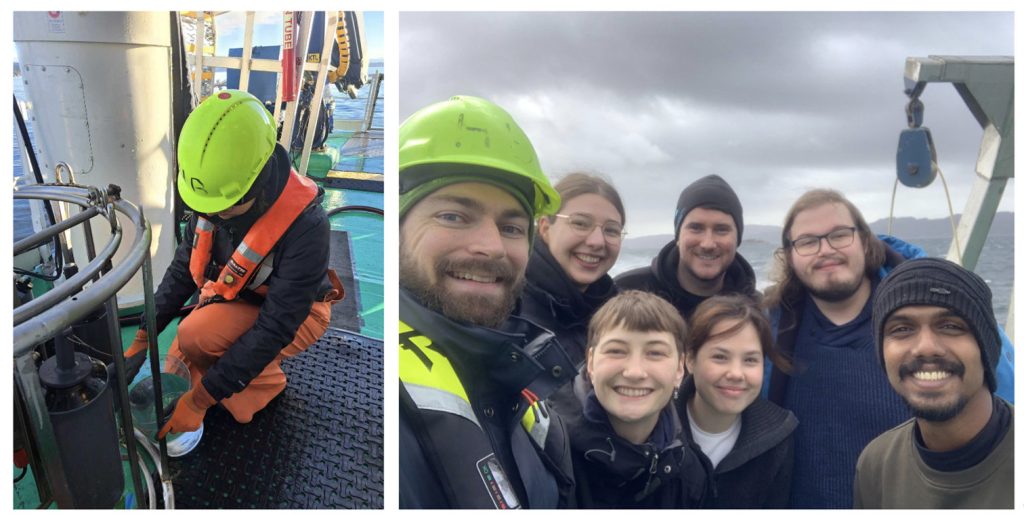
The highlights of my internship were of course both sampling trips I got to attend on board the Research Vessel Hans Brattstrøm. On the ship I learned a lot about the specific sampling methods for these incredibly delicate invertebrates. Despite experiencing a bit of seasickness the first time, I assisted with net deployment, sorting the animals, and collecting water samples from different depths.

Wrok on board the reserach wesse (person holding a transparent cylinder with water) and a group photo of the participants

Figure 3: Collecting water samples from a CTD; The Team during a successful sampling day (Pictures: Luis Martell, Praveen Raj)

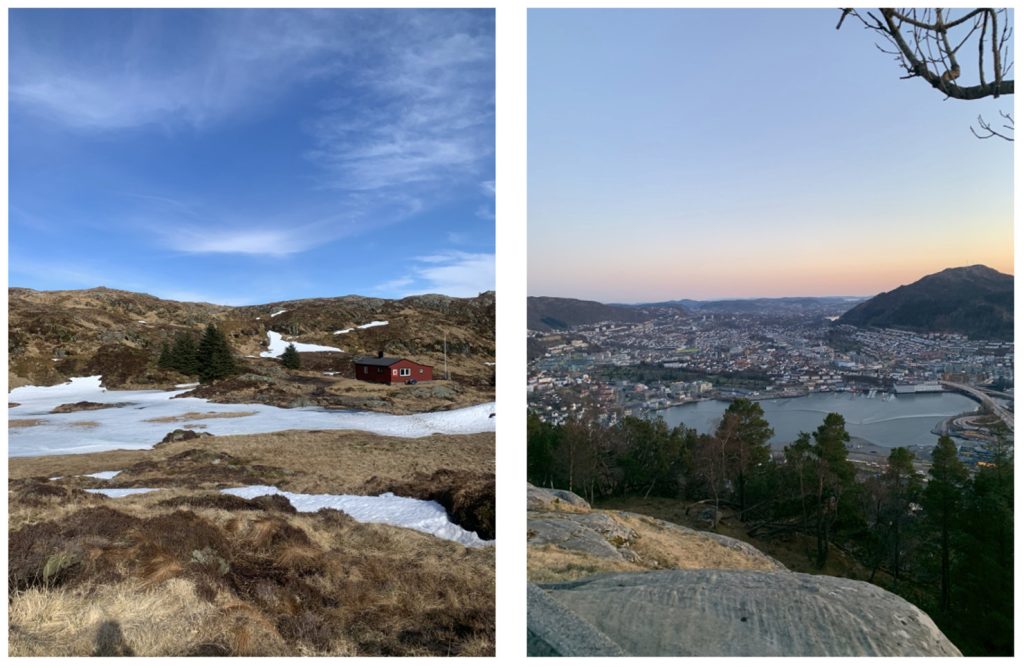
Apart from an amazing Jellyfish Team, Bergen has many more attractions to offer. I highly recommend packing your hiking boots for your next visit, as the surrounding mountains offer breathtaking scenery. And if you share my passion for the ocean, a visit to the Nordnes Sjøbad is a must. Here you can take a refreshing dip in the frosty ocean before warming up in the heated saltwater pool.

Scenic shots of nature in Bergen

Figure 4: Hike to Ulriken and Fløyen with a view of Bergen (Pictures: Alina Lösing)

 I would like to take a moment to acknowledge Joan’s invaluable contribution to my internship at the University Museum of Bergen. Joan’s dedication and extensive knowledge have made my experience truly unforgettable.

-Alina