Tag Archives: museum

Workshop in South Africa

Post author and sponge taxonomist Francisca together with the workshop roll-up

In the beginning of October, I travelled to Cape Town to teach in the workshop “Deep-sea Biodiversity and Applied Taxonomy Workshop”.

This workshop was organized within the framework of the SponBIODIV project and hosted by the Iziko South African Museum.

You can read more here about SponBIODIV (homepage) and Iziko South African museum (homepage).

Several participants, from different countries and institutions in Africa, joined us during this week to learn about marine biodiversity research, monitoring, taxonomy, and management of marine resources.

Each day included lectures in the morning followed by practical sessions in the afternoon. During the practical sessions, participants were divided into small groups, each guided by two tutors, where they learned how to handle and identify sponge specimens. They became familiar with the main literature used in sponge taxonomy, learned how to prepare spicule slides (a crucial step in sponge identification), and explored important aspects of sponge morphology and taxonomic nomenclature.

Top image: (pic 5) One of the groups with the sponge specimens assigned to them. During the practical sessions, participants were able to identify their specimens. Left image: (pic 6) The museum has dedicated staff responsible for digitizing the collections. Here, they demonstrated part of this work, including how photographs are taken for museum catalogues and databases. Right image: (pic 7) Participants handling sponge specimens during the practical sessions. Photos by Francisca Carvalho.
Top image: One of the groups with the sponge specimens assigned to them. During the practical sessions, participants were able to identify their specimens. Left image: The museum has dedicated staff responsible for digitizing the collections. Here, they demonstrated part of this work, including how photographs are taken for museum catalogues and databases. Right image: Participants handling sponge specimens during the practical sessions. Photos by Francisca Carvalho.

Participants also learned the importance of carefully recording information when collecting specimens in the field. This information is essential for biodiversity studies, as it helps transform field observations into clear, reliable, and usable.

At the end of the workshop, each group presented the results of their assignment.

four images of scientists at work
Top left: group 4, Andreu Santìn, Francisca Carvalho, Carlota Amoda, Ryan Rambaran, Lisa Skein and Lailah Gifty Akita (from left to right). Top right: Carlota Amoda presenting. Bottom left: Lailah Gifty Akita presenting. Bottom right: Ryan Rambaran presenting. Photos by Francisca Carvalho.

In addition, one session introduced participants to image-based identification methods used in marine biodiversity surveys, using BIIGLE software.

Scientists working on computers
Practical sessions in image-based identifcation methods. Photos by Francisca Carvalho

This was an amazing experience. Everyone was very friendly, welcoming, and highly motivated. Cape Town is also a beautiful city, surrounded by nature and stunning landscapes. We hope to organize or participate in a similar workshop again in the future.
It is also worth mentioning that the workshop attracted more than 200 applications for only 16 available places, highlighting the strong interest in sponge taxonomy and marine biodiversity research.

A yellow museum building against a blue sky, a museum exhibit with whales, and museum jars with marine invertebrates in them
The Iziko South African Museum and parts of its collections. Photos by Francisca Carvalho.
3 images, from the left a group of 8 standing in a museum collection, an image of a yellow museum building in front of Table Maountain, and a selfie of a group of happy smiling scientists out in the sun
Left image: Tutors visiting the museum collection, Toufiek Samaai, Frederico Martins, Joana Xavier, Javier Cristobo, Andreu Santin, Pilar Rios (from left to right). Top right: The Iziko South African Museum, with the Table Mountain in the background. Bottom right: (pic 19) Francisca Carvalho, Pilar Rios, Javier Cristobo, Joana Xavier, Andreu Santin (from left to right). Photos by Francisca Carvalho.

A special thank you to Toufiek Samaai, a partner in SponBIODIV, for hosting us throughout the week. I also would like to thank all the staff at the Iziko South African Museum for their excellent organization, support, and warm welcome to all participants throughout the workshop.

-Francisca Carvalho

https://www.iziko.org.za/museums/south-african-museum/

Today is Taxonomist Appreciation Day!

Initiated in 2013 by Dr. Terry McGlynn, March 19th has become

the International Taxonomist Appreciation Day!

The what, now?

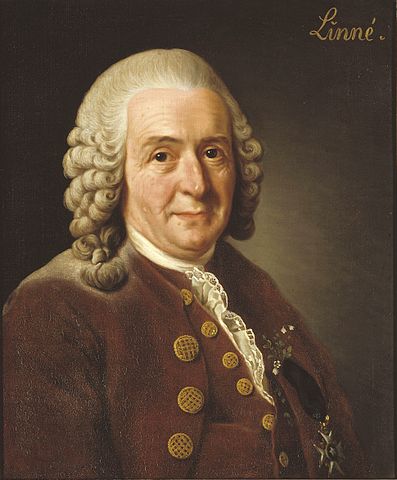
 Carl von Linné 1707–1778 painted by A. Roslin. (Wikimedia)

Carl von Linné 1707–1778 painted by A. Roslin (Wikimedia)

Taxonomy is the science of naming, describing and classifying organisms and includes all plants, animals and microorganisms of the world. Using morphological, behavioural, genetic and biochemical observations, taxonomists identify, describe and arrange species into classifications, including those that are new to science.

Modern taxonomy began with Carl Linnaeus (1707 – 1778), who devised the formal binominal (two-part) naming system we use to classify all lifeforms. Since then, approximately 1.7 million animal species have been formally described (according to the IUCN (2014)).

It is of course impossible to give a definite number for how many species that are still awaiting recognition and formal description, but a estimate by Mora et al. in 2011 suggest that

In spite of 250 years of taxonomic classification and over 1.2 million* species already catalogued in a central database, our results suggest that some 86% of existing species on Earth and 91% of species in the ocean still await description. Renewed interest in further exploration and taxonomy is required if this significant gap in our knowledge of life on Earth is to be closed.

From Buzz Hoot Roar

If you want to know more about what taxonomists do, you can have a read here: Taxonomy matters. Here’s why (Lyman Museum at McGill University).

There is a lot of work still to be done – and far too few taxonomists available to do it – so please appreciate the ones that we have!

Celebrate the day by

  • giving your local taxonomist a cup of coffee (or tea), and a word of encouragement (a big pile of money for research wouldn’t be amiss, either!)
  • check out the taxonomy pun contest at Buzz Hoot Roar (“a graphics-driven blog that shares and/or explains a scientific concept in 300 words or less”)
  • visit Curious Taxonomy for funny, punny, interesting and plain strange species names – and share your favourites!
    Some of ours include:
    Did you know that there is a genus of small marine snails named Ittibittium? These are – of course – smaller than molluscs of the genus Bittium.
    Strategus longichomperus (Ratcliffe) is a Honduran scarab with long mandibles.
    Ytu brutus (Spangler, 1980) is a water beetle, “Ytu” comes from the local (in Brazil) word for waterfall.
    Has your favourite book/movie/game characters been honoured with a naming?
    Aleiodes atuin, A. binkyi, A. deathi ++ (Butcher et al. 2012) are braconid wasps – all named from Terry Pratchett’s Discworld series. [Zootaxa 3457]
    Darthvaderum (Hunt, 1996) is an oribatid mite “When I saw the SEM (scanning electron micrograph) of the gnathosoma I immediately thought of Darth Vader, evil antihero of Star Wars.” [Records of the Australian Museum 48: 303-324]
    Gwaihiria (Nauman) is a diapriid wasp named for Gwaihir, Lord of the Eagles.
  • visit the Biodiversity Heritage Library and learn something new
  • visit the exhibitions at your local Natural History Museum (Bergen sadly excepted at the moment – we will open again in 2019!)
  • If you can read Norwegian, check out this post about Amphipod taxonomy and taxonomists, and peruse the ongoing biodiversity projects from the Norwegian Biodiversity Information Centre, where taxonomists work to better our knowledge of the local fauna and flora.
  • understand the value of Museum Collections for Research and Society
  • remember the naturalists who have perished in pursuit of knowledge by visiting The Wall of the Dead: A Memorial to Fallen Naturalists
  • tell your taxonomist co-workers that you appreciate their work!


#loveyourtaxonomist is the word of the day!


Mora C, Tittensor DP, Adl S, Simpson AGB, Worm B (2011) How Many Species Are There on Earth and in the Ocean? PLoS Biol 9(8): e1001127.

The World Conservation Union (2014) IUCN Red List of Threatened Species 2014.3. Summary Statistics for Globally Threatened Species. Table 1: Numbers of threatened species by major groups of organisms (1996–2014))

*see paper for explanation for this number vs the 1.7 million of the IUCN.