Tag Archives: Manet Team

Strengthening Zooplankton Monitoring: Akvaplan NIVA and the University of Bergen join forces!

Last month, the Manet team at the Department of Natural History welcomed colleagues from Akvaplan NIVA Bergen and the Institute of Biology (BIO-UiB) for a four-day workshop, an event that was part of UiB’s strategic funding for marine cooperation in 2026.

Our goal was simple yet ambitious: to bring together key actors in Bergen, combining knowledge of marine species with modern computing tools to improve how we monitor zooplankton (i.e. the tiny drifting animals that live in our waters and play a crucial role in marine food webs, supporting larger species such as fish and whales).
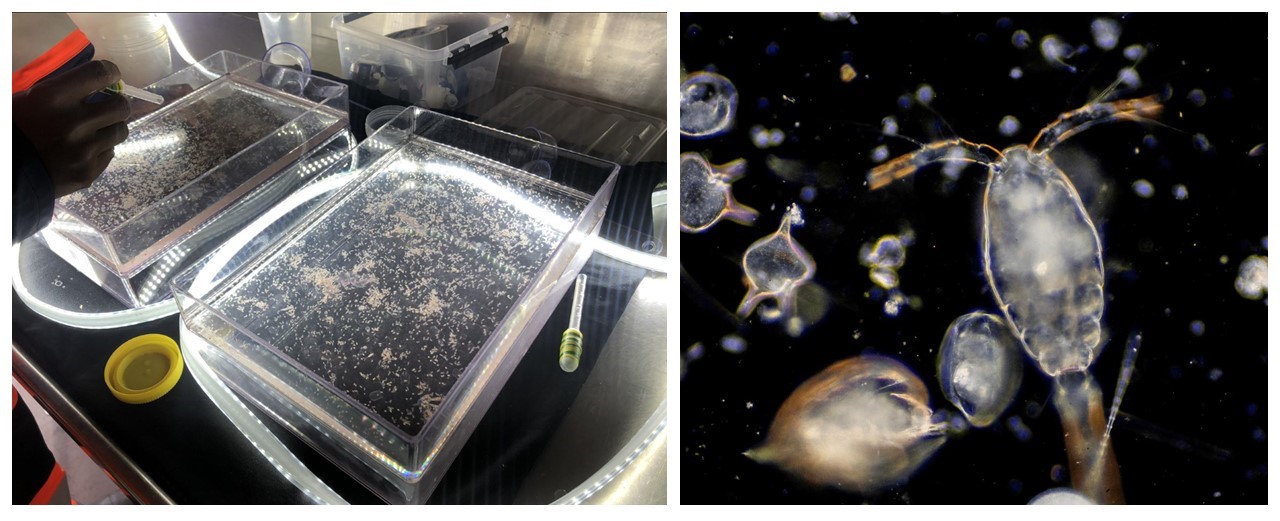
Zooplankton samples may look messy (left), but a closer look (right) shows they are full of life! Image credit: Lea Dober

The workshop was called “Strengthening regional capacity in monitoring of polar zooplankton through metabarcoding and DNA reference libraries”. Metabarcoding is a method that uses DNA to identify species from samples without the need to examine each organism under a microscope.
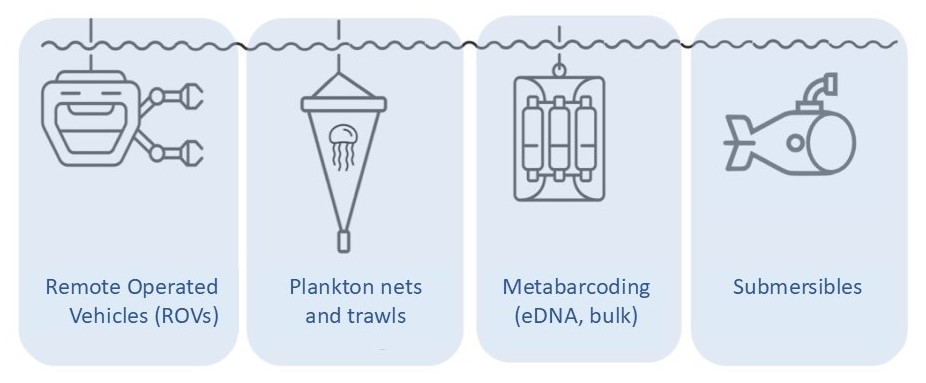
These are some of the ways we can collect and/or detect zooplankton. Metabarcoding is unique because it does not require catching or observing the animals, and instead it identifies them by analyzing their DNA. Image credit: Aino Hosia.

The advantage of metabarcoding over traditional zooplankton analysis is that it is much faster and can detect species that are too small, fragile or damaged to be recognized otherwise. However, to be successful, metabarcoding depends on having a complete and reliable DNA reference library to compare results with and usually requires considerable computing power.
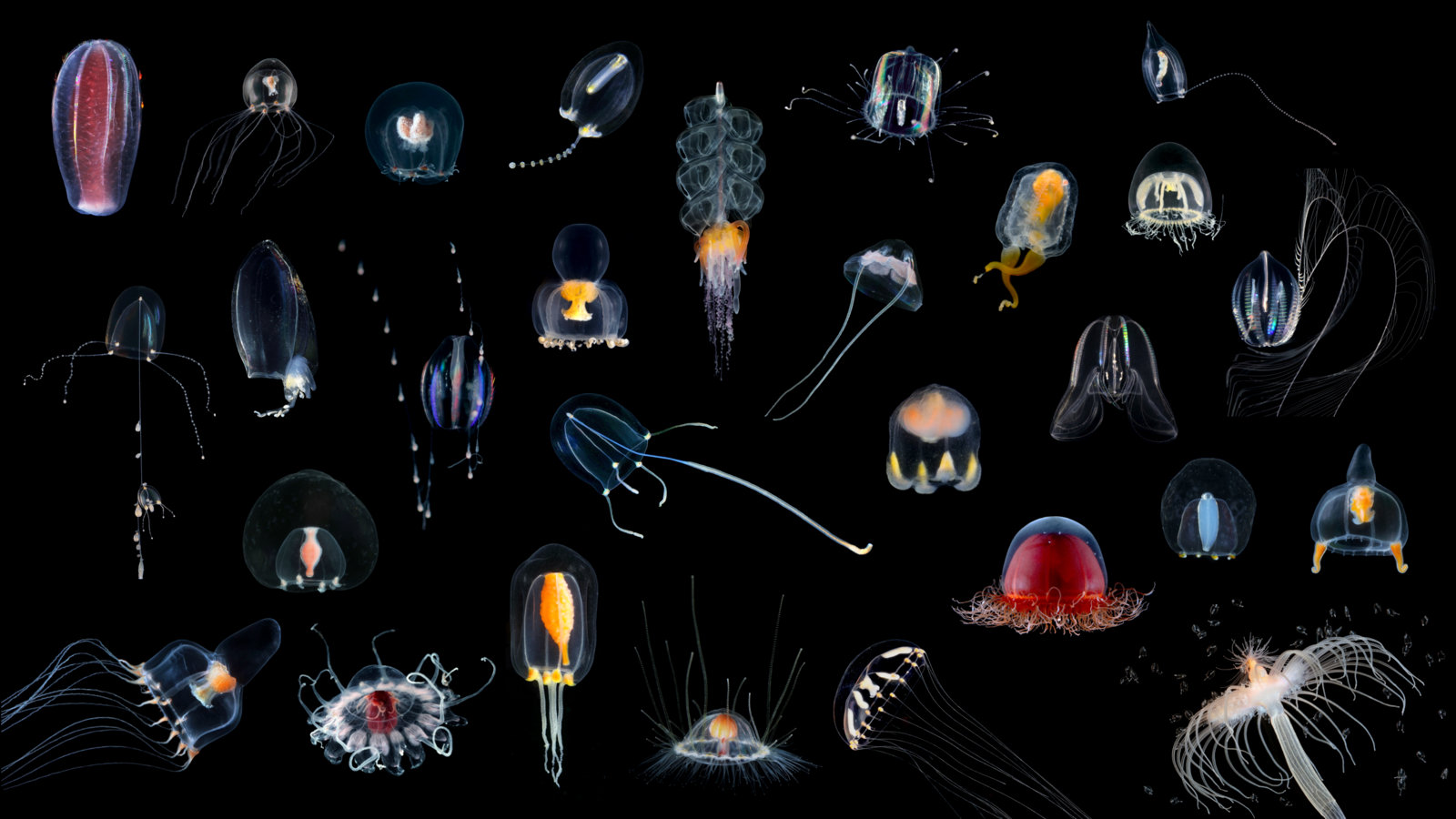
We at the University Museum of Bergen host one of the most complete DNA-barcoded collections of gelatinous zooplankton in the world. Image credit: Joan J. Soto-Angel

Over the four days of the workshop, we learned how to carry out metabarcoding analyses using a ‘supercomputer’ called SAGA. We worked carefully on keeping research workflows consistent and well documented and transforming raw DNA sequences into species lists that can be interpreted and checked, and we also explored ways to verify and refine the results to make sure the identifications were as accurate as possible.
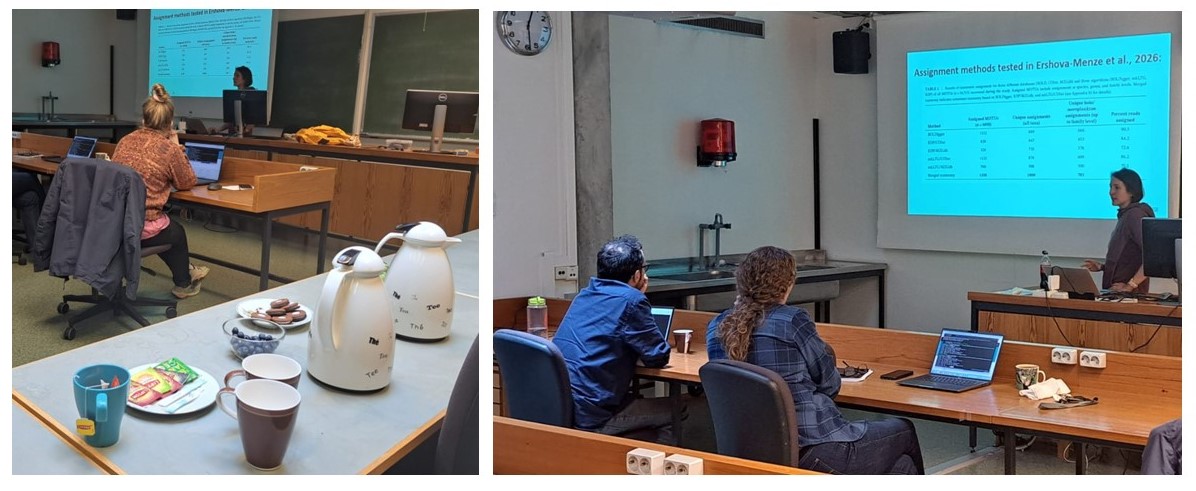
We spent most of the workshop working in front of our computers, with tea, fruit and snacks each day to keep energy levels up. Image credit: Joan J. Soto-Angel

One good thing with plankton research is that it does not happen only in front of a monitor, so in parallel to our final session, students from our team joined a plankton sampling trip to nearby Korsfjorden. The organisms they collected were added to our growing DNA reference databases and will help improve the precision of zooplankton metabarcoding in the years to come.
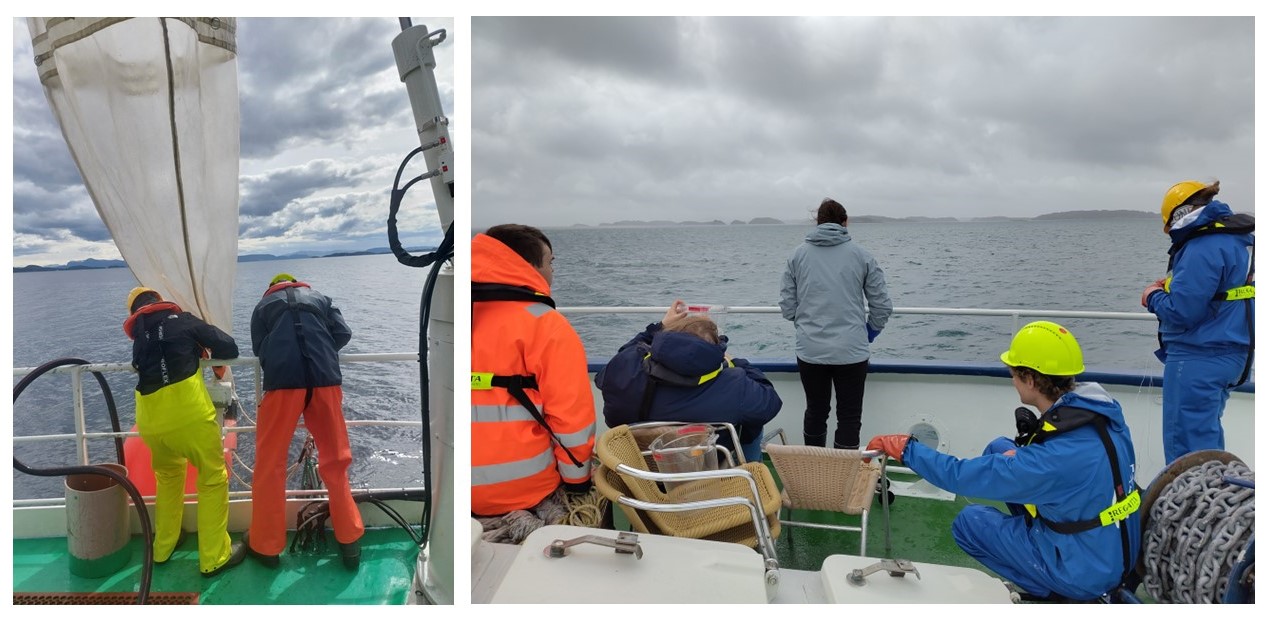
Plankton sampling with nets involves deploying and retrieving the net (left), as well as a little waiting when the net is in the water (right). Image credits: Lea Dober

By combining species identification and advanced computing in a single collaborative effort, the workshop demonstrated how Bergen’s marine science community can achieve more when working together. It was a week of learning, exchanging knowledge and building stronger connections that will help us better understand and protect some of the smallest yet most important creatures in our oceans.
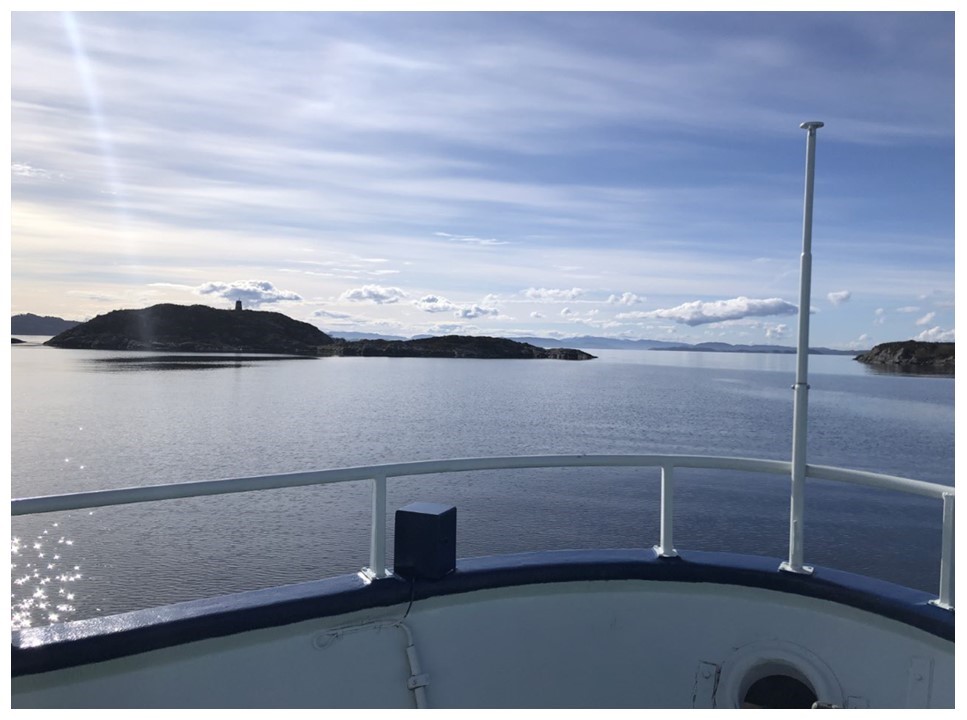
A bright day in the fjords… but which zooplankton species are hiding beneath the surface? Metabarcoding might help us find out. Image credit: Lea Dober

– Luis

Exciting news from the Manet Team!

There are periods when you wait quietly for good news to knock. Then there are those rare, wonderful times when great news shows up in twos. We are excited to announce that the Manet Team at the Department of Natural History has been granted not one, but two new projects: CHANGEZ – Challenging taxa of gelatinous zooplankton, and ODIN – Octocoral diversity in Norway.

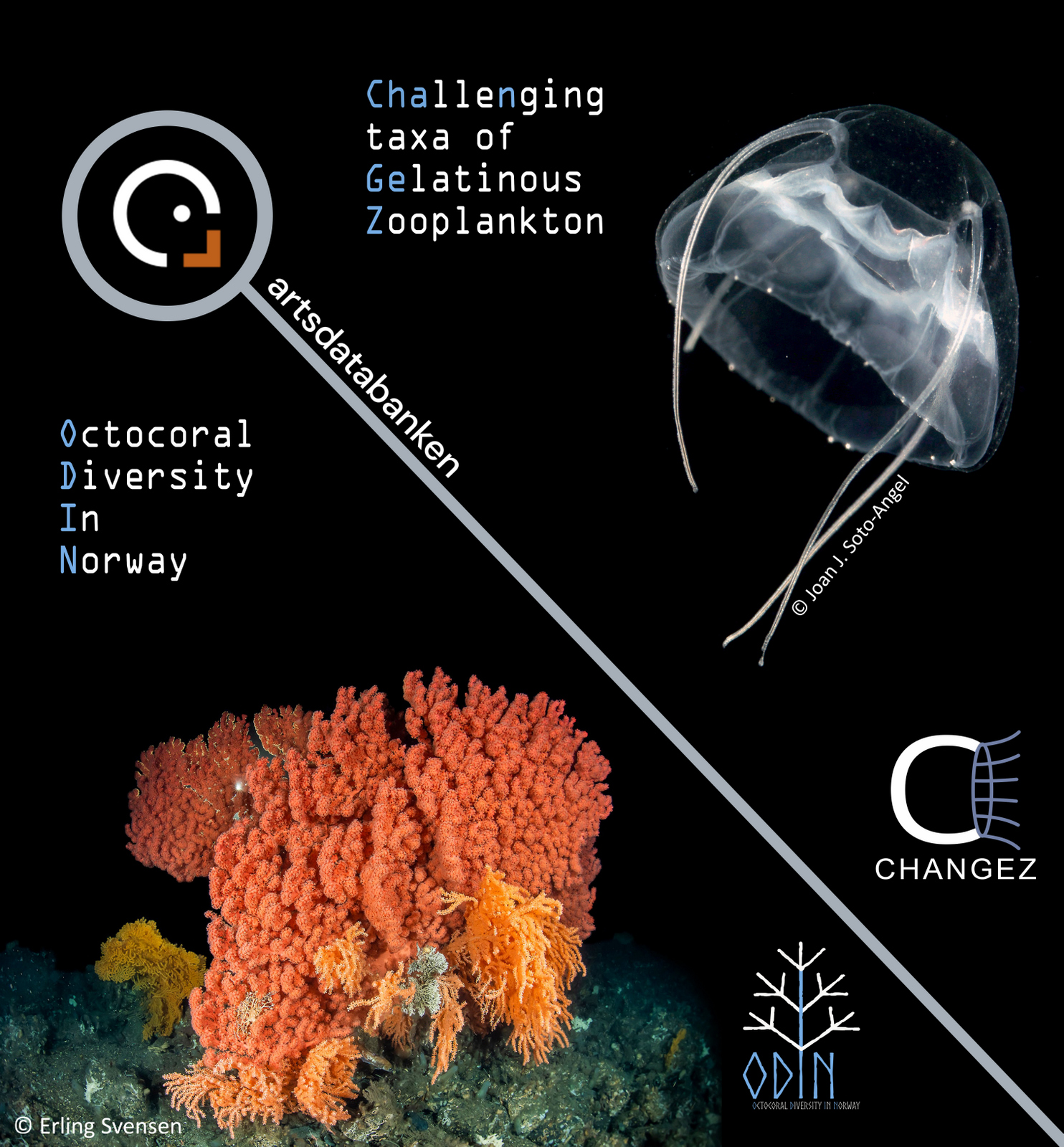
Figure 1. New projects funded by Artsdatabanken to the Manet Team at the Department of Natural History. Pictures: Erling Svensen and Joan J. Soto-Angel.

The projects are funded by Artsdatabanken, the Norwegian Biodiversity Information Centre. As you know, Artsdatabanken projects (aka artsprosjekter) aim to improve knowledge of the diversity and distribution of poorly known groups. This is precisely the case for octocorals, as well as many jellyfish and ctenophores in Norwegian waters. Among others, Artsprosjekter aim to produce new DNA barcodes that will allow for an effective species monitoring. 

Octocorals (sea fans, sea pens, and soft corals) are important habitat formers, providing substrate and nursery grounds for many species. They are also important indicators for Vulnerable Marine Ecosystems. Despite their importance, our knowledge of octocoral true diversity and distribution in Norwegian waters remains scarce. Project ODIN (Project leader: Joan J. Soto-Angel) aims to fill this gap in the knowledge by applying a synergetic combination of imaging and sequencing tools.

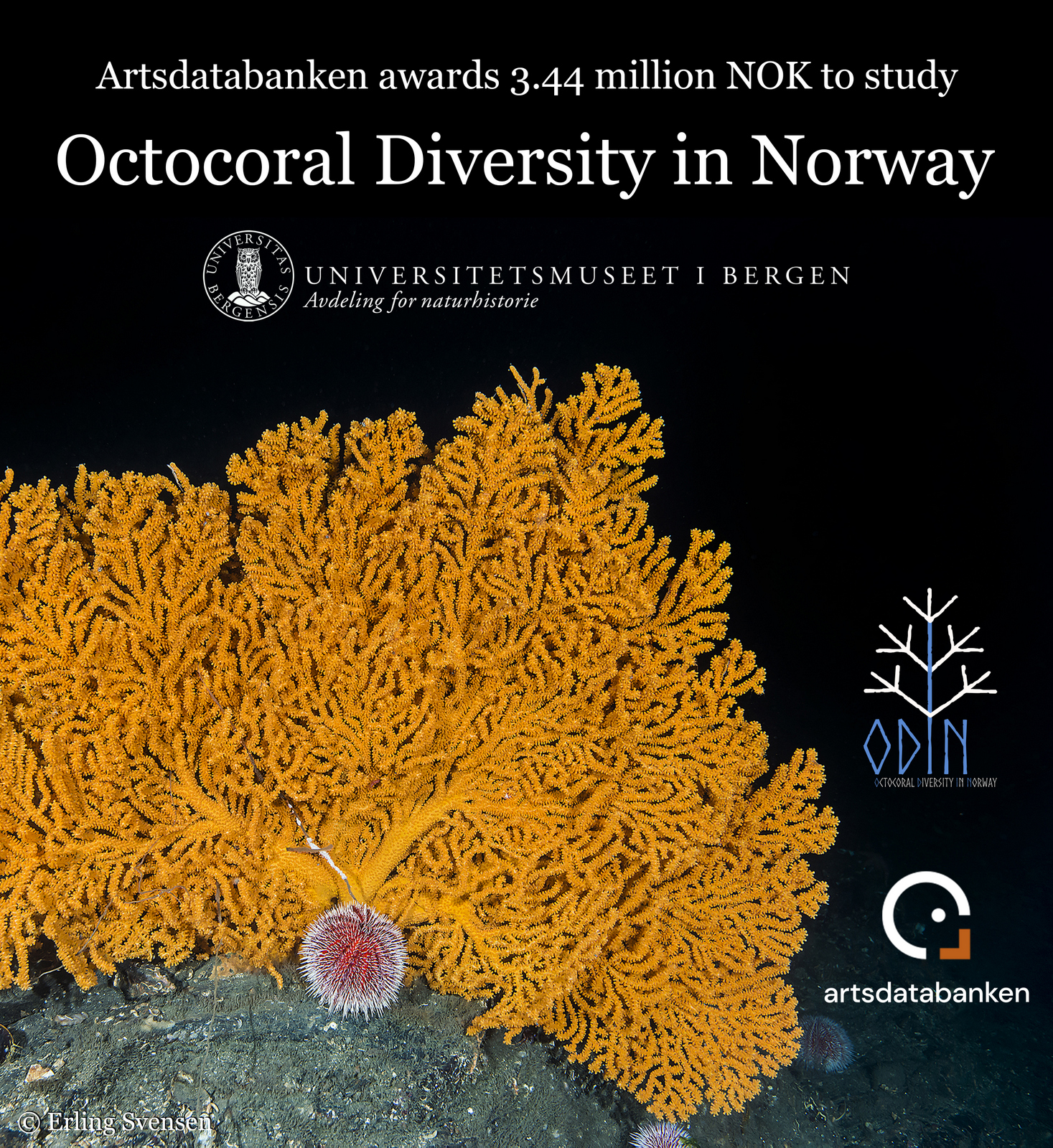
Figure 2. Newly granted Artsprosjektet ODIN – Octocoral Diversity in Norway. Picture: Erling Svensen

The diversity of certain jellies (such as trachylines, siphonophores, coronates and ctenophores (aka comb jellies) in Norwegian waters remains inadequately explored. These gelatinous animals are key predators and ubiquitous members of zooplankton, particularly in oceanic waters. However, their fragile bodies and peculiar genetic makeup make them challenging to sample, identify, and DNA sequence. CHANGEZ (Project leader: Aino Hosia) will use the power of next generation sequencing techniques to unveil their hidden diversity.

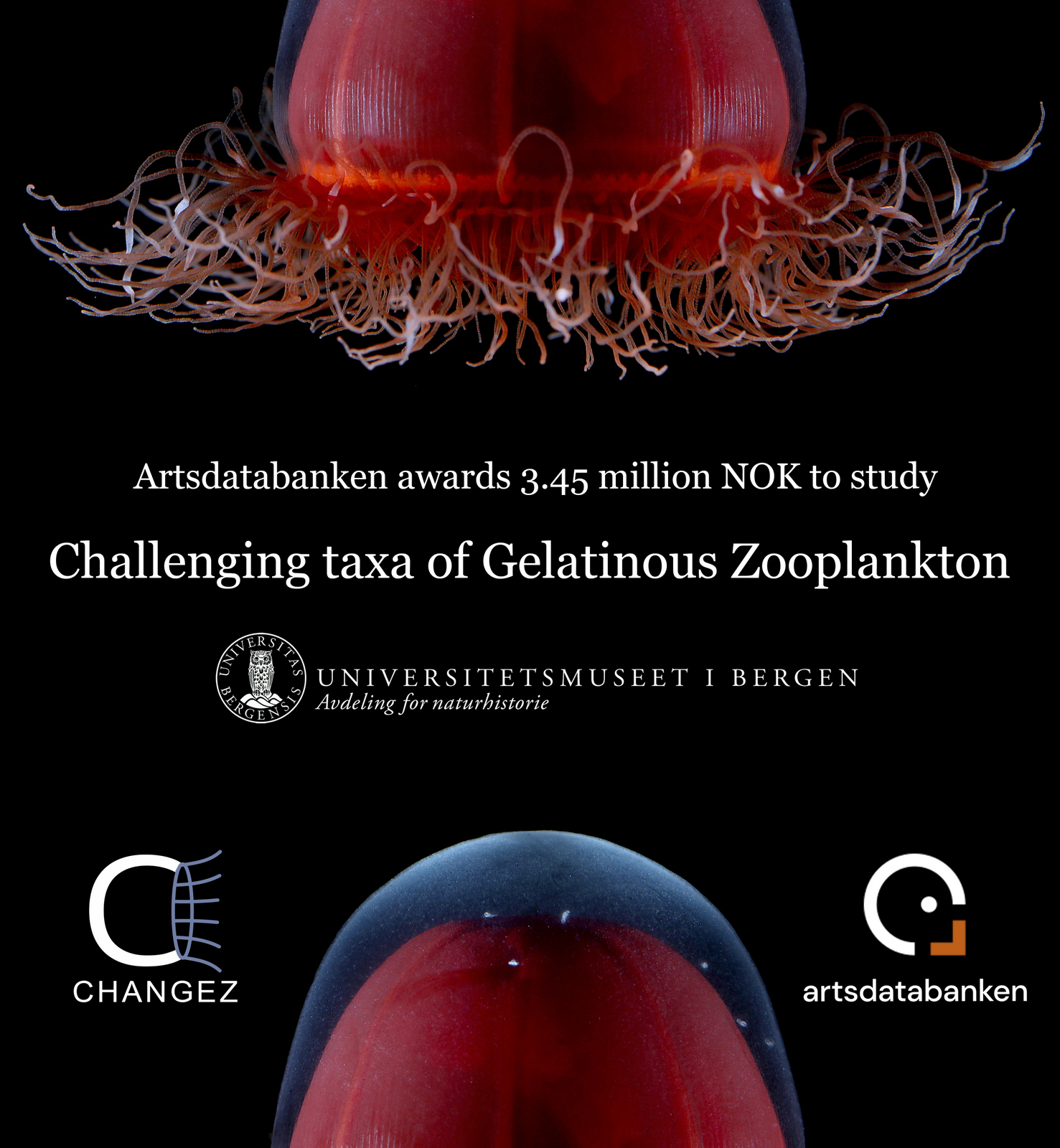
black background photograph of a deep red jellyfish that is both coming into the frame from below and excitig it at top. Text reads "Artsdatabanken awards 3.45 million NOK to study CHANGEZ: Challenging Taxa of Gelatinous Zooplankton"
Figure 3. A new project on jellies for the Museum, this time focusing on the very challenging ones. CHANGEZ: Challenging Taxa of Gelatinous Zooplankton. Picture: Joan J. Soto-Angel

We are very excited about the years to come, the questions we will be able to answer through these projects, and the prospects for continuing our work on such fascinating groups of marine invertebrates.

Joan J. Soto-Angel, Manet Team